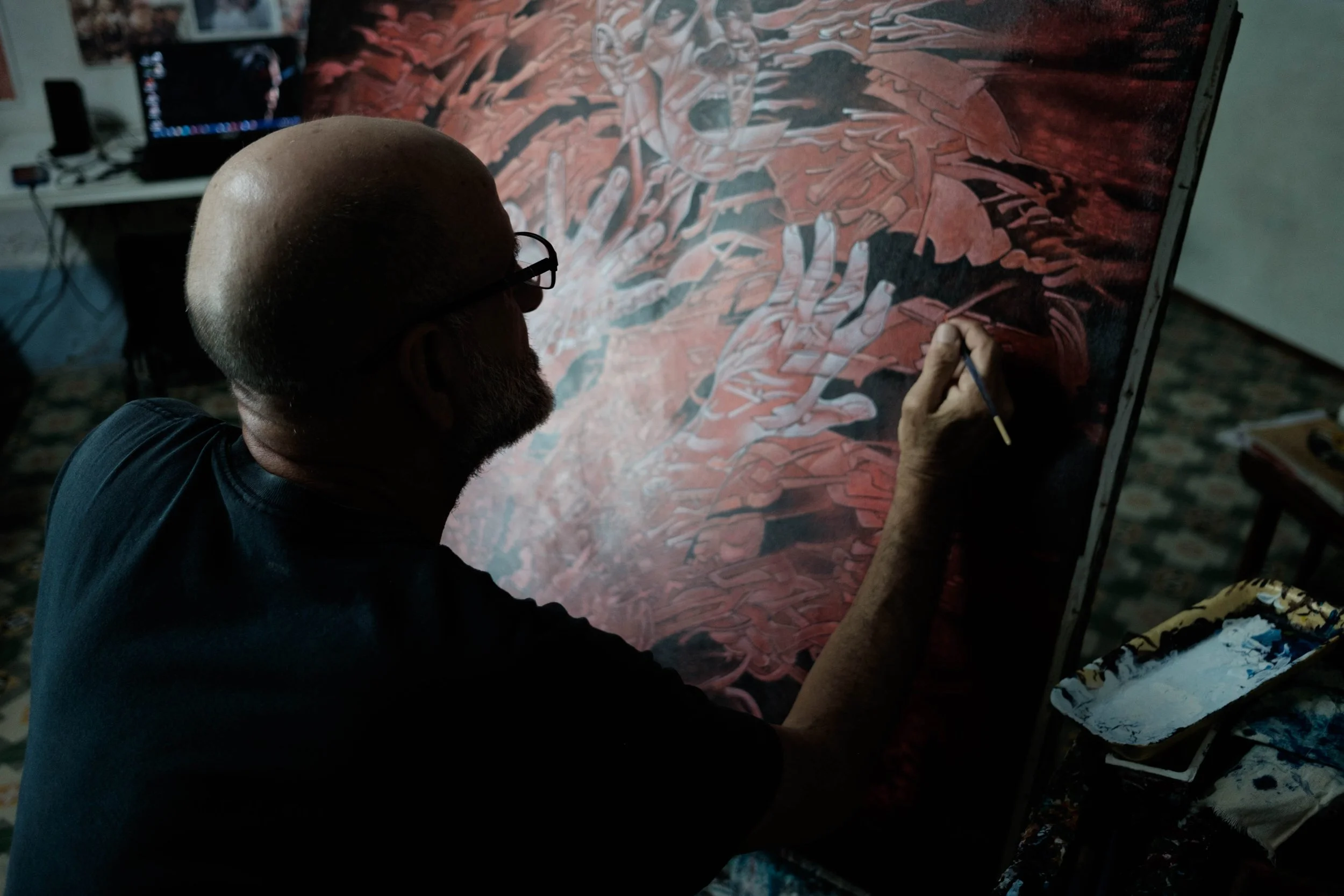
The Artist
César Leal Jiménez, 1948–2024. Regla, Havana.
TEXT AND PHOTOGRAPHS BY OLEG VASILENKOHe died on December 23, 2024. He was 76. I learned about it later — the way you learn things about people you've lost track of — and thought immediately of the photographs, still sitting in a folder on my hard drive, seven years unfinished.
Searching for the story
We had come to Cuba for a workshop led by Sergei Maksimishin — a week on how to build photo stories, an introduction to photojournalism for people who had been shooting but hadn't yet learned to look for narratives. The first evening was a lecture: what makes a story, how to find one, what to look for. The next morning, we were supposed to go find ours.
The problem was Cuba. No internet worth using, no local press to scan, no way to quickly map what was happening and where. We did what people must have done before search engines: we asked the woman who brought us breakfast. She mentioned someone — a relative, a neighbor — whose home had been damaged in a recent storm. Perfect. We took a taxi.
The house turned out to be unfinished rather than destroyed. Whatever drama we had imagined wasn't there. But the man we'd come to see shrugged and said: "If you're looking for a story — there's a museum nearby. A man built it himself. Very interesting." We drove over. Someone's attempt to mix Hundertwasser with Gaudí, colorful and eccentric, built for tourists. Interesting, but not quite right.
Back at the hotel, I went walking. Found an artist selling work from a shop. We talked, made tentative plans to shoot. Still didn't feel like the right thing.
Then Karen — one of the trip organizers — suggested we take a ferry across to Regla. There was a church there, she'd heard. A Black Jesus and a Black Madonna. Worth seeing.
Regla
The crossing takes ten minutes. The Havana waterfront slips away behind you; the Regla shore comes up quietly. No tourist infrastructure. Quieter streets. A neighborhood that belongs to the people who live in it.
The church — Iglesia de Nuestra Señora de Regla — was everything promised: cool inside, dim, the Black Madonna watching from behind the altar. We stayed awhile.
Coming out, walking up the street, I noticed a door with a large printed poster on it. An election notice, candidates listed. Cuba in November 2017: we stopped to look at it, the way you stop to look at things that are familiar in shape but strange in context.
"Hey!" The voice came from across the street, in English. A man stood in a doorway, watching us. He had heard Russian and was curious. He introduced himself: César.
Regla, November 2017
The school
The doorway he'd called from was his school. He waved us in.
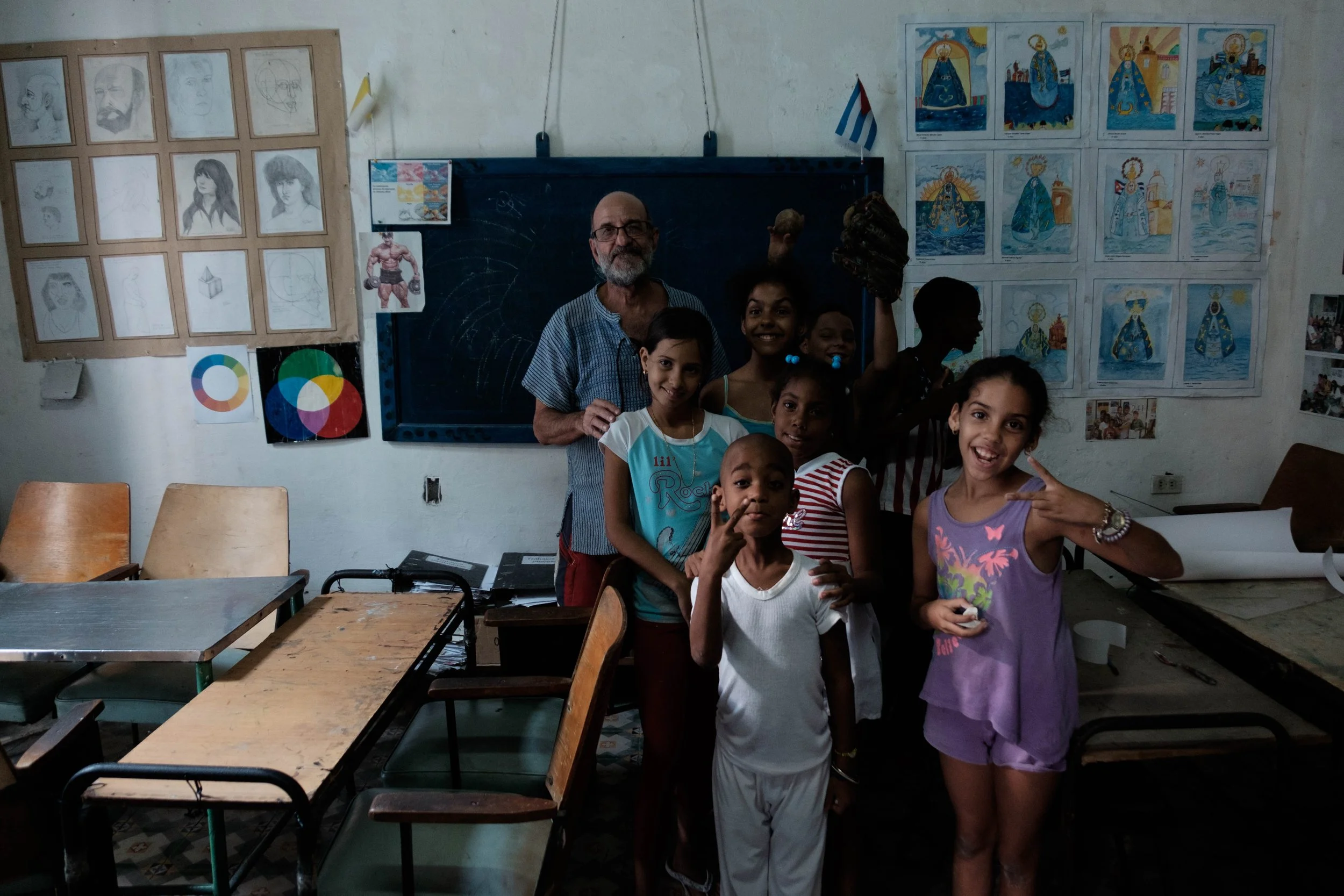
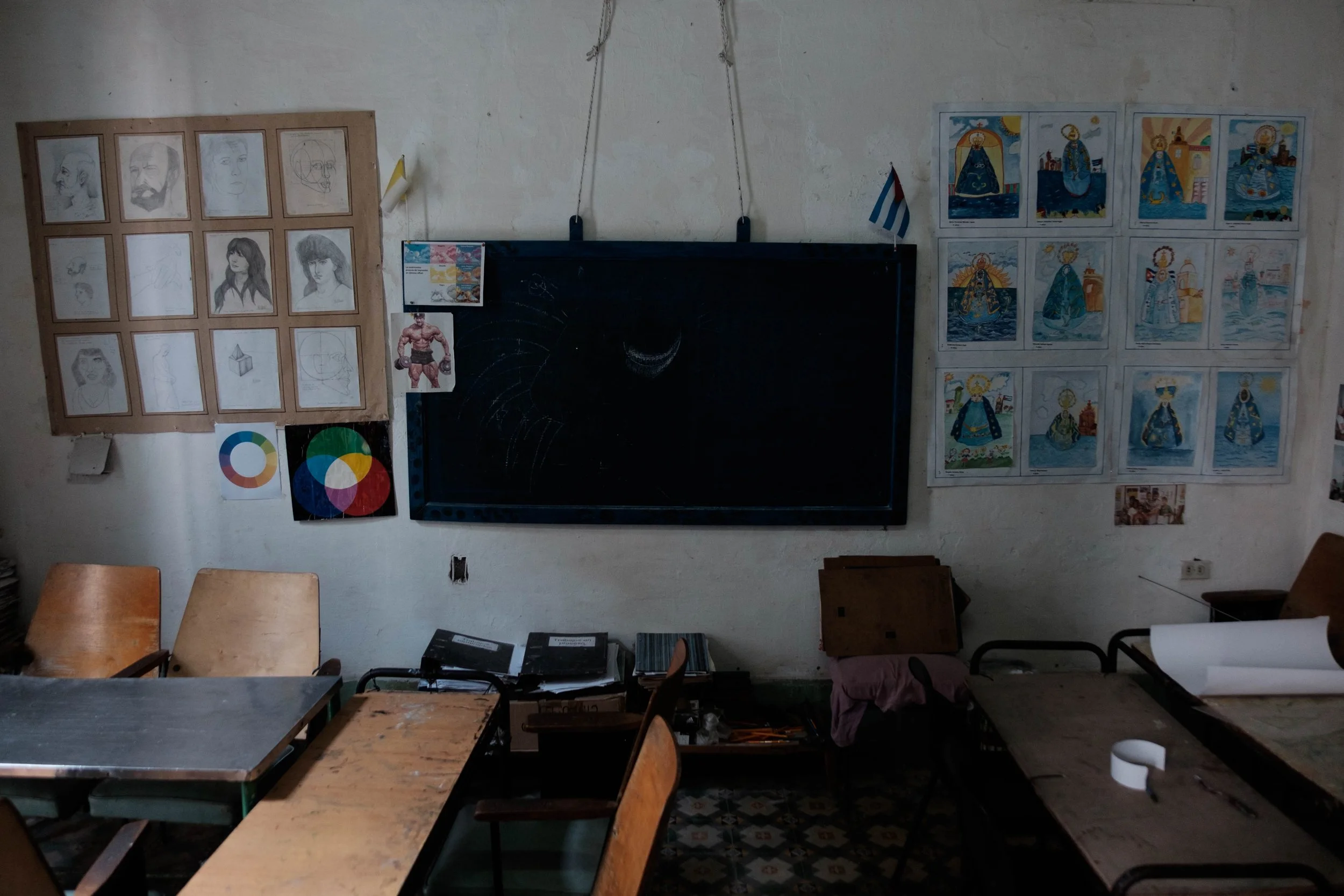
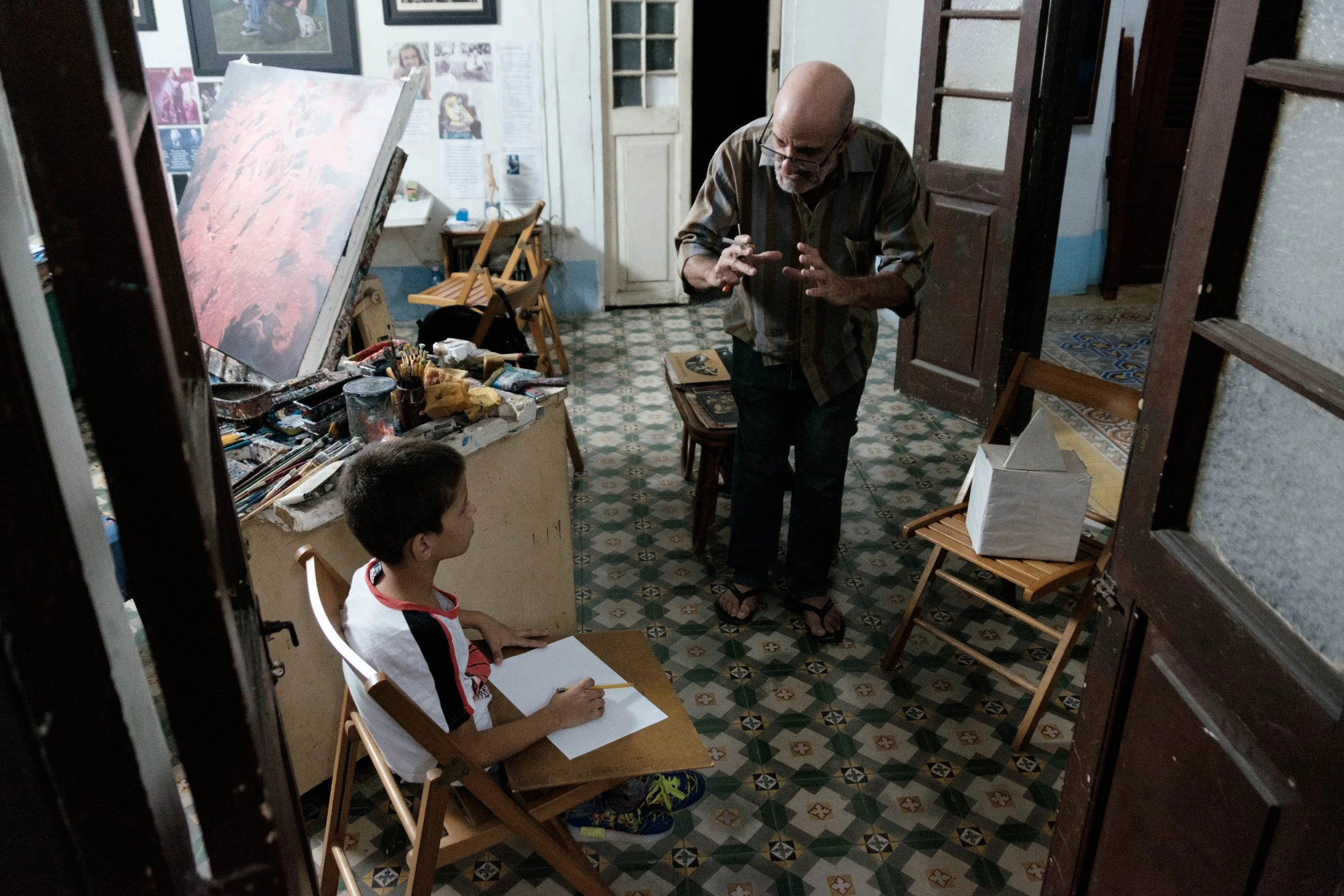
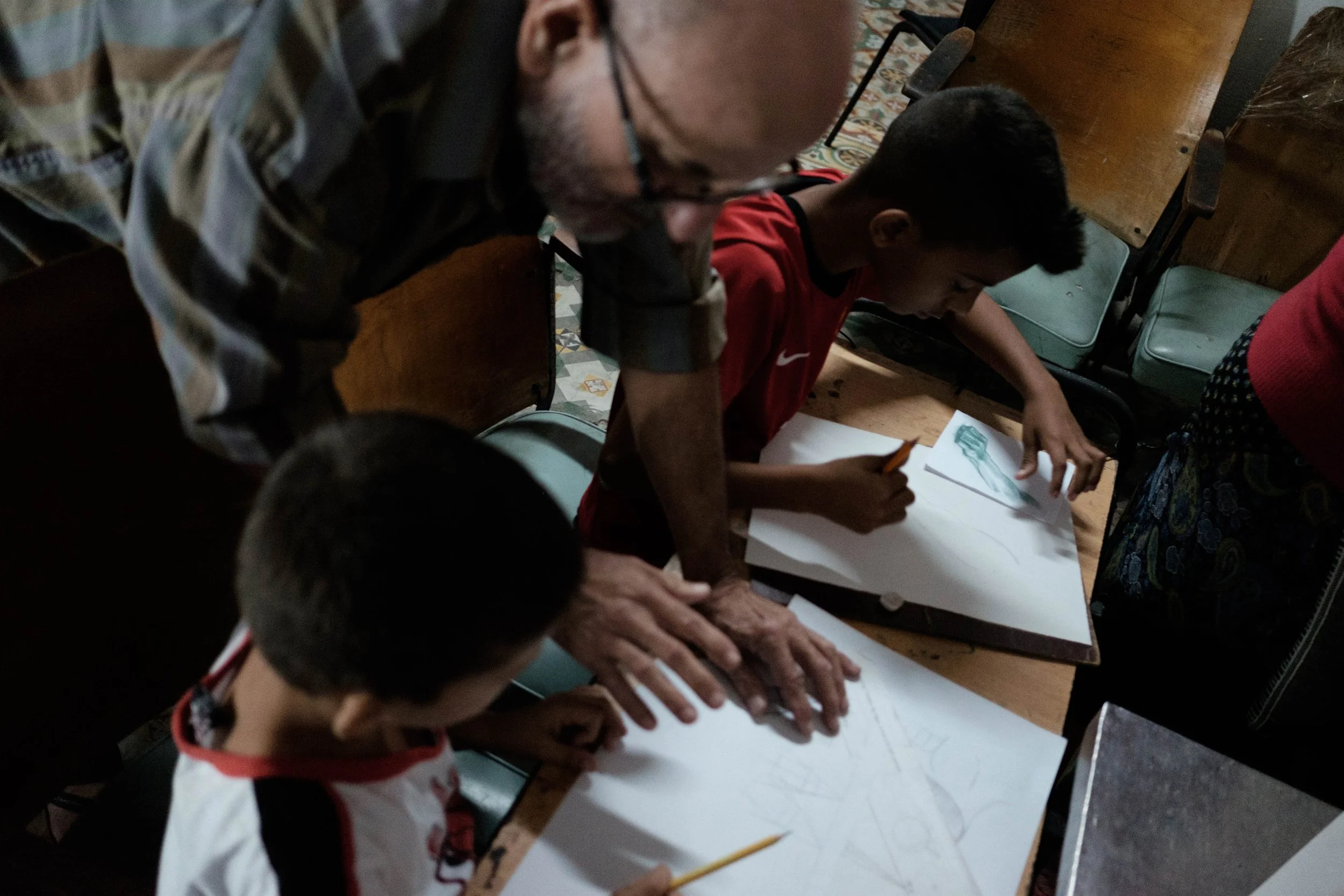
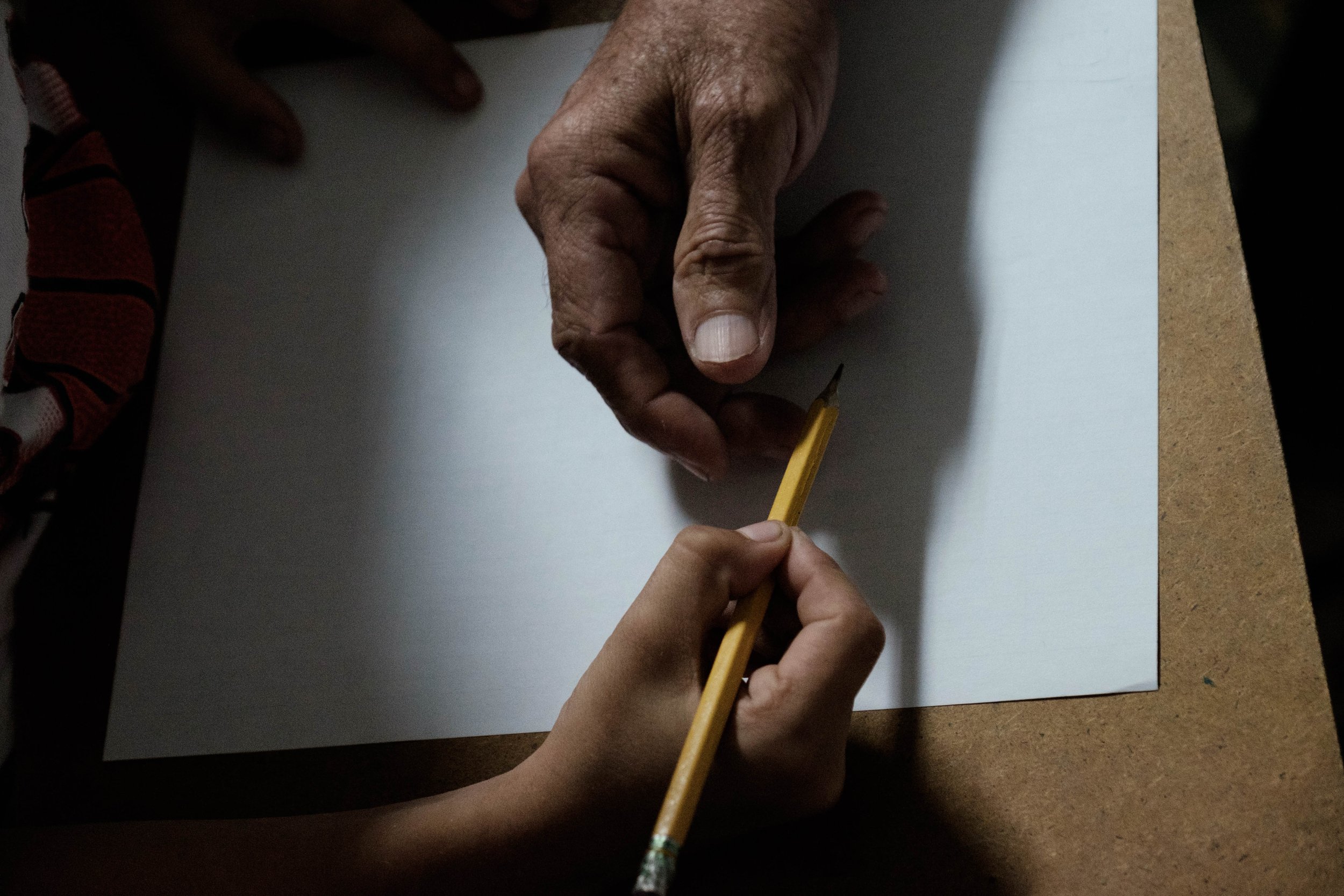
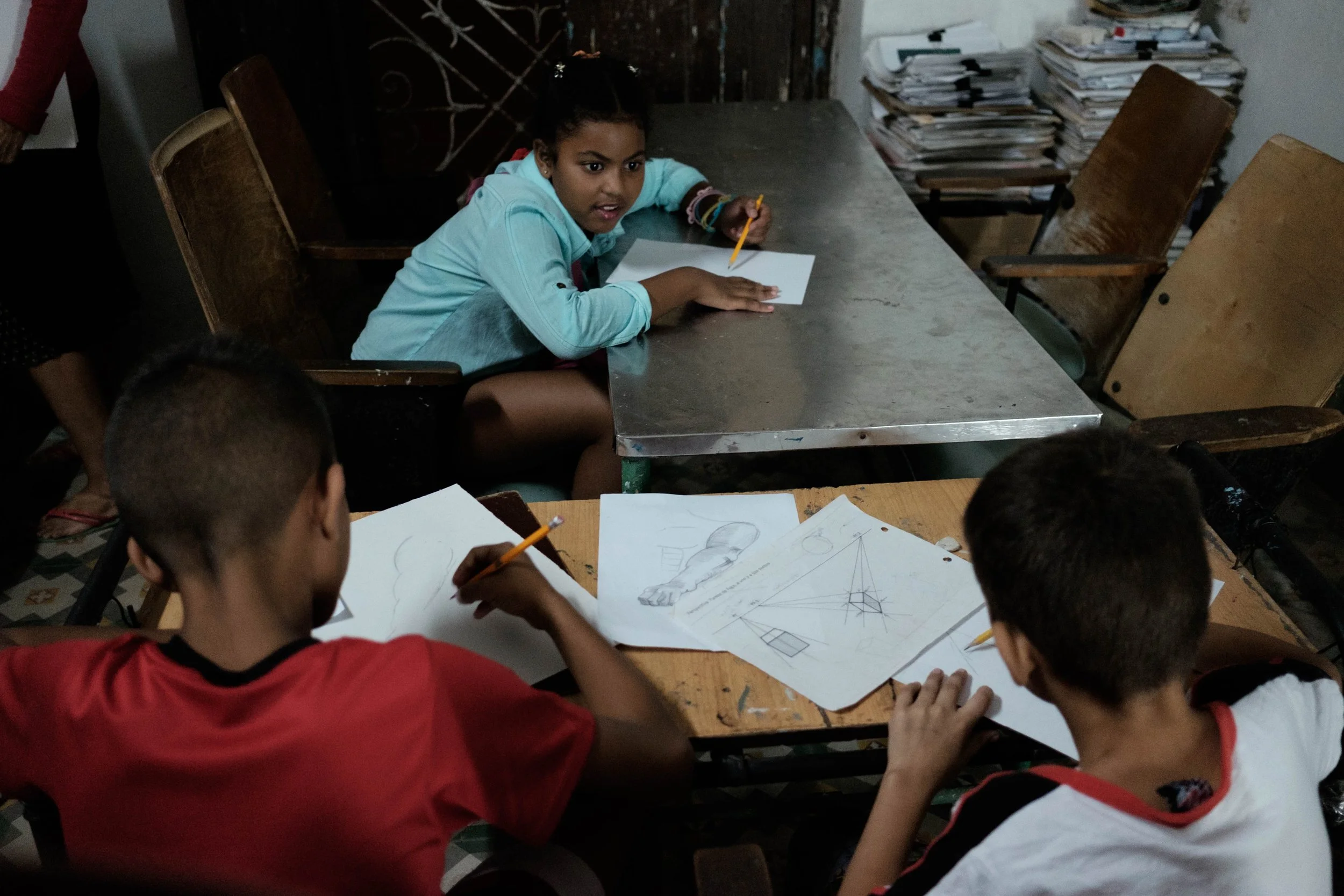
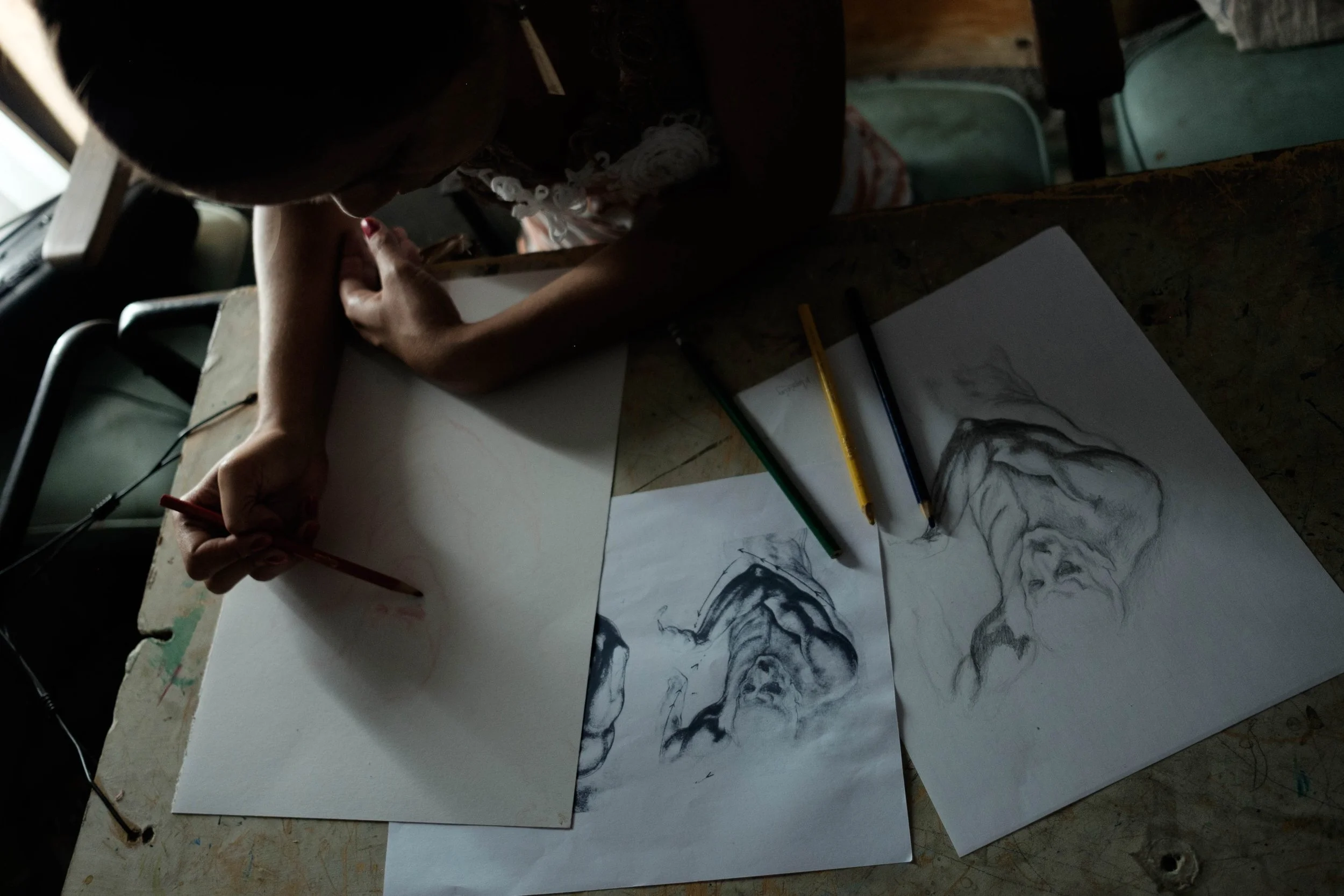
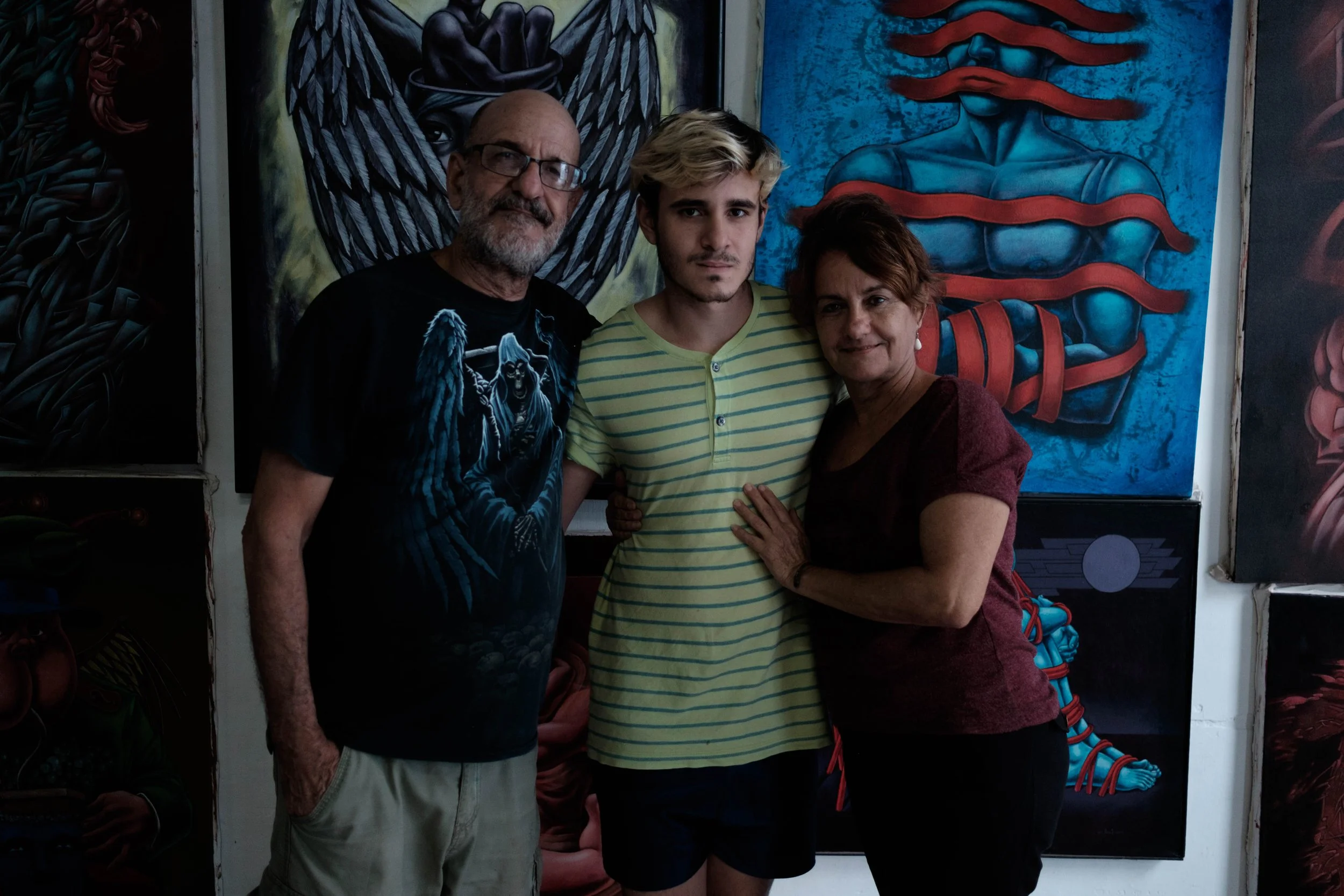
A large room, canvases everywhere — on walls, leaning against furniture, stacked in corners. Tables where the classes happened. Three days a week, he told us: Monday, Wednesday, Friday. Students from five to ninety-five years old. Free for everyone. His assistant Loida Martínez helped him run it. Friends in the United States provided what support they could.
He didn't present this as charity. It was simply the thing he had decided to do.
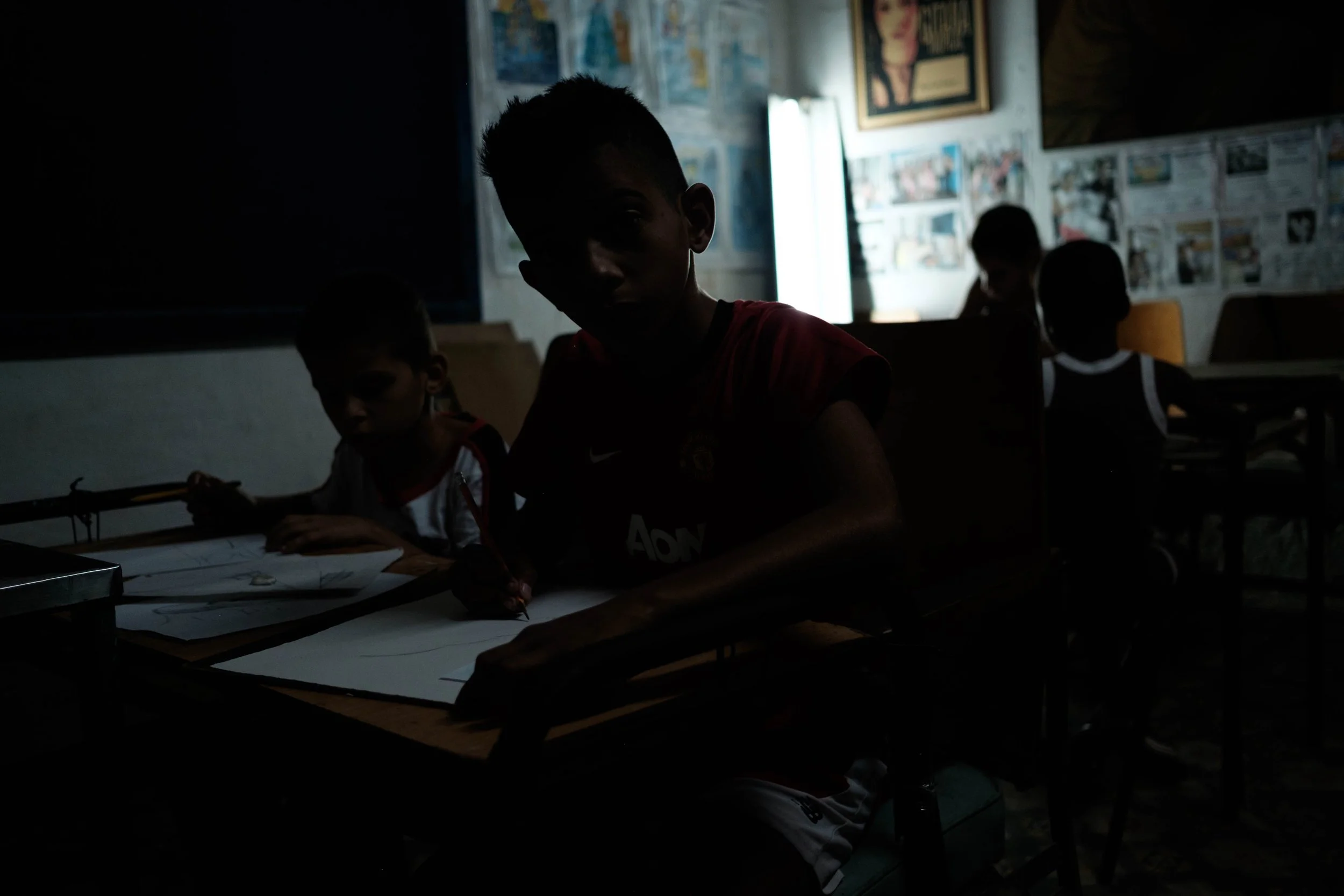
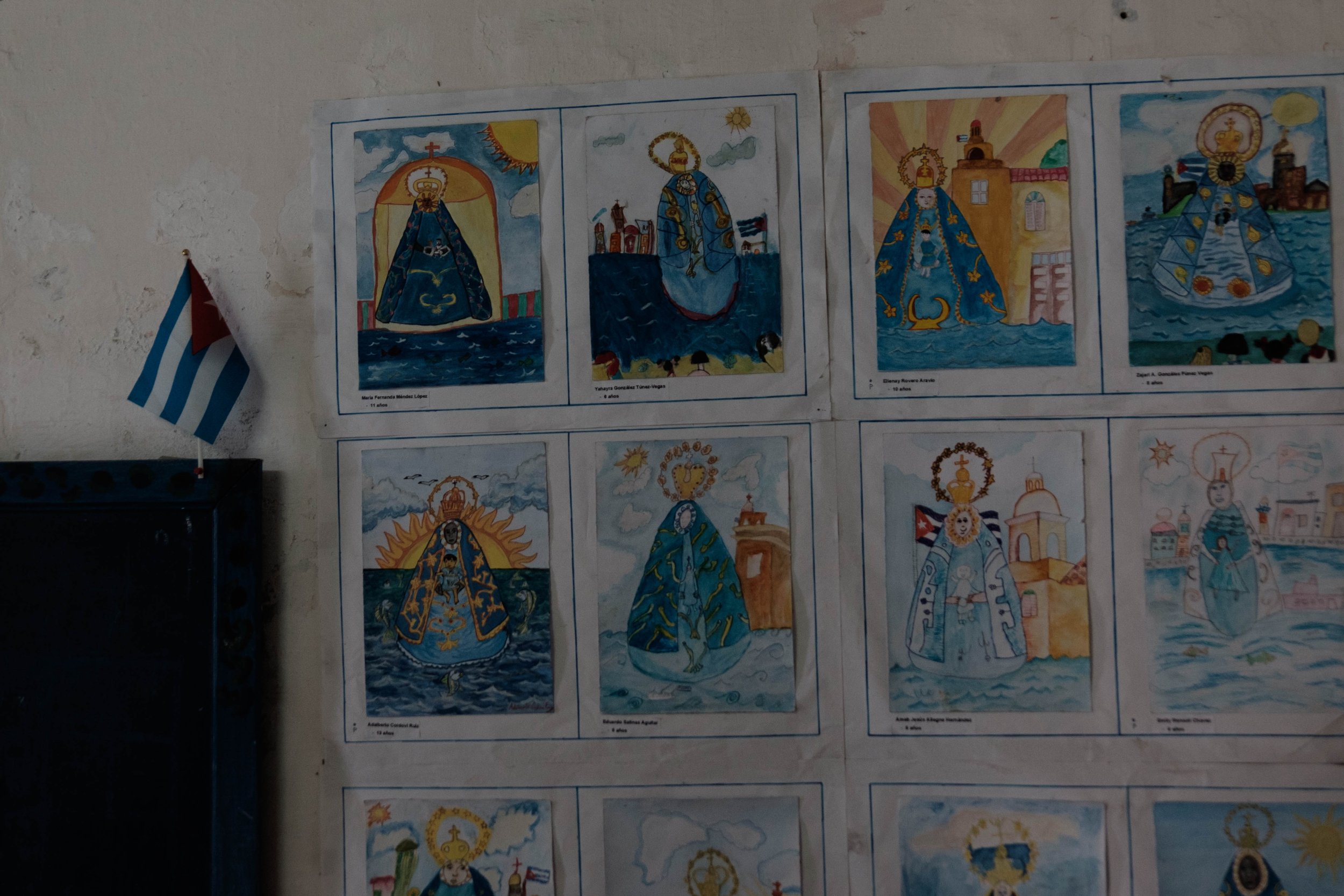
The house
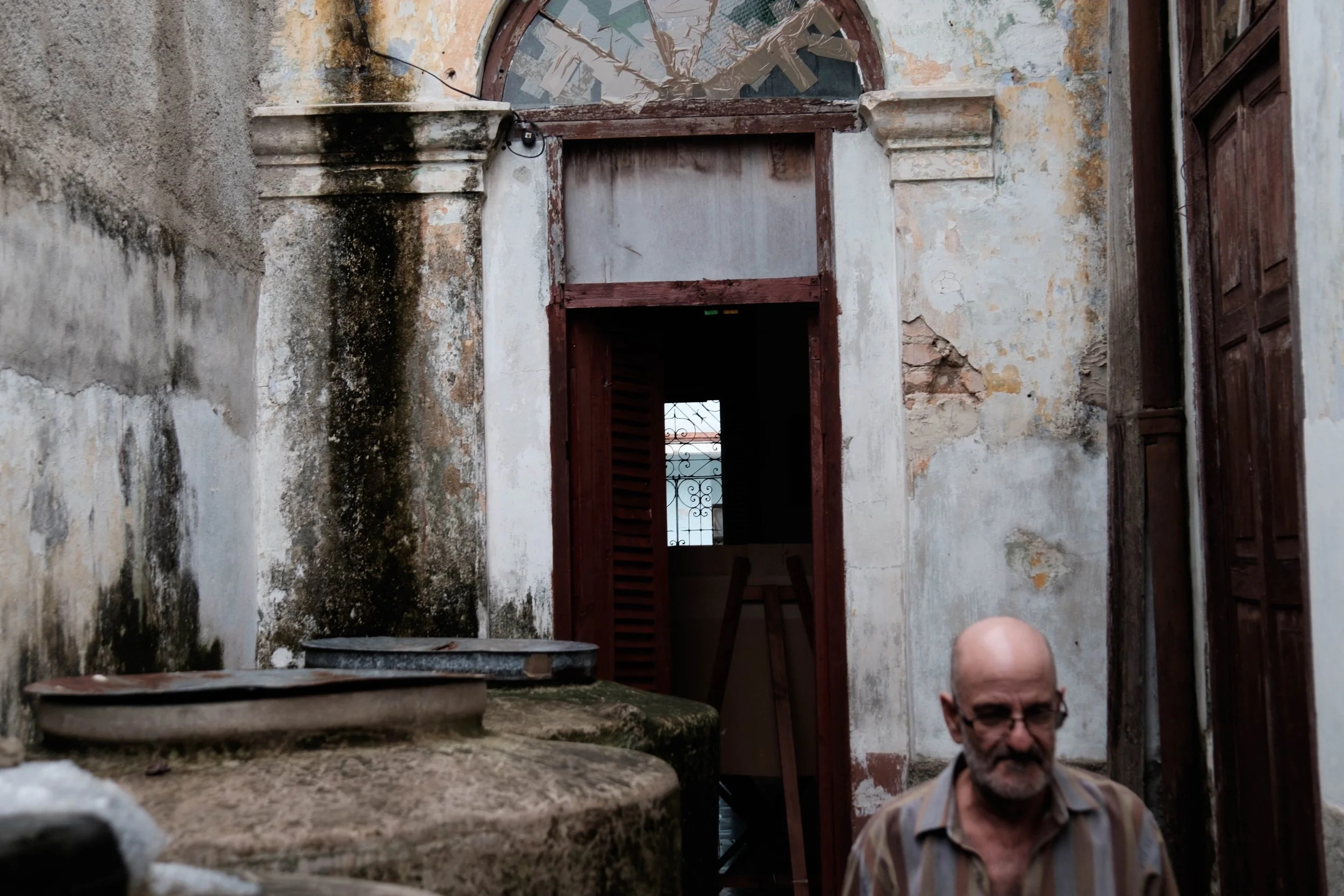
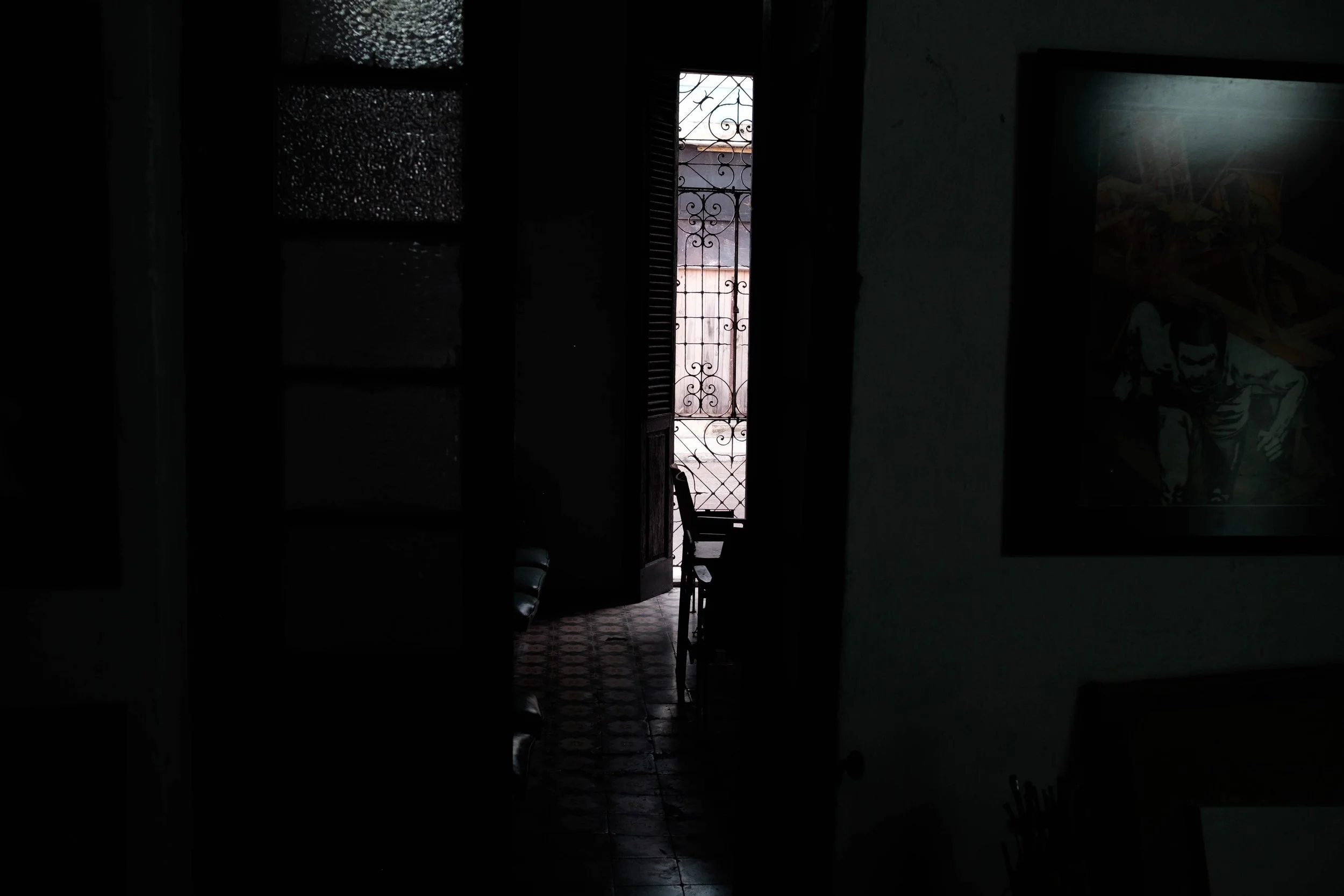
The home and the studio were the same place. The state had given him the building on the condition that he restore it himself. He had done that, over years.
The stained glass windows were beautiful. Hurricanes came, as they do in Havana, and blew them out. He taped the pieces back with packing tape and waited for a time when he could fix them properly.
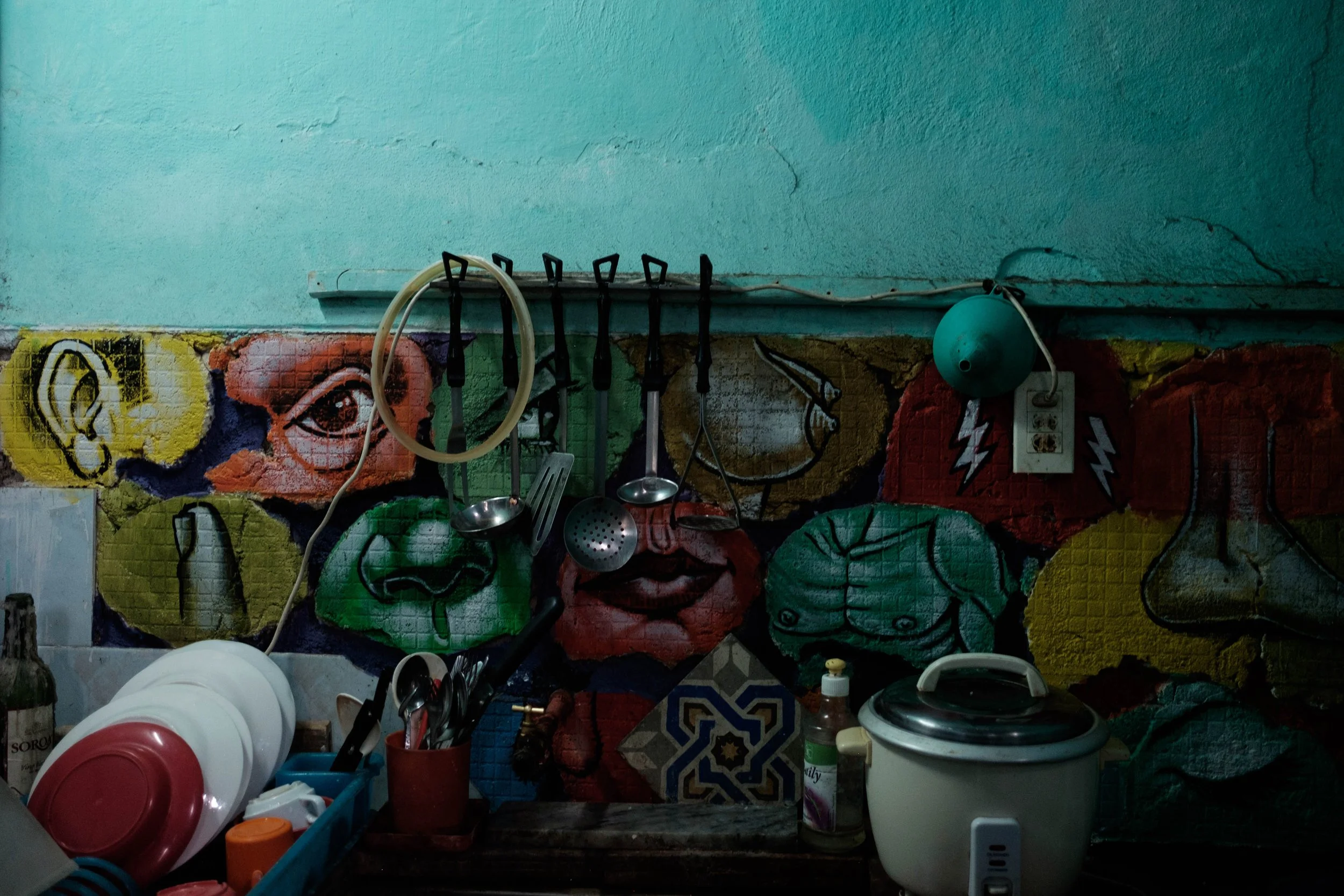
There was no running water from the city mains. Large barrels in the kitchen.
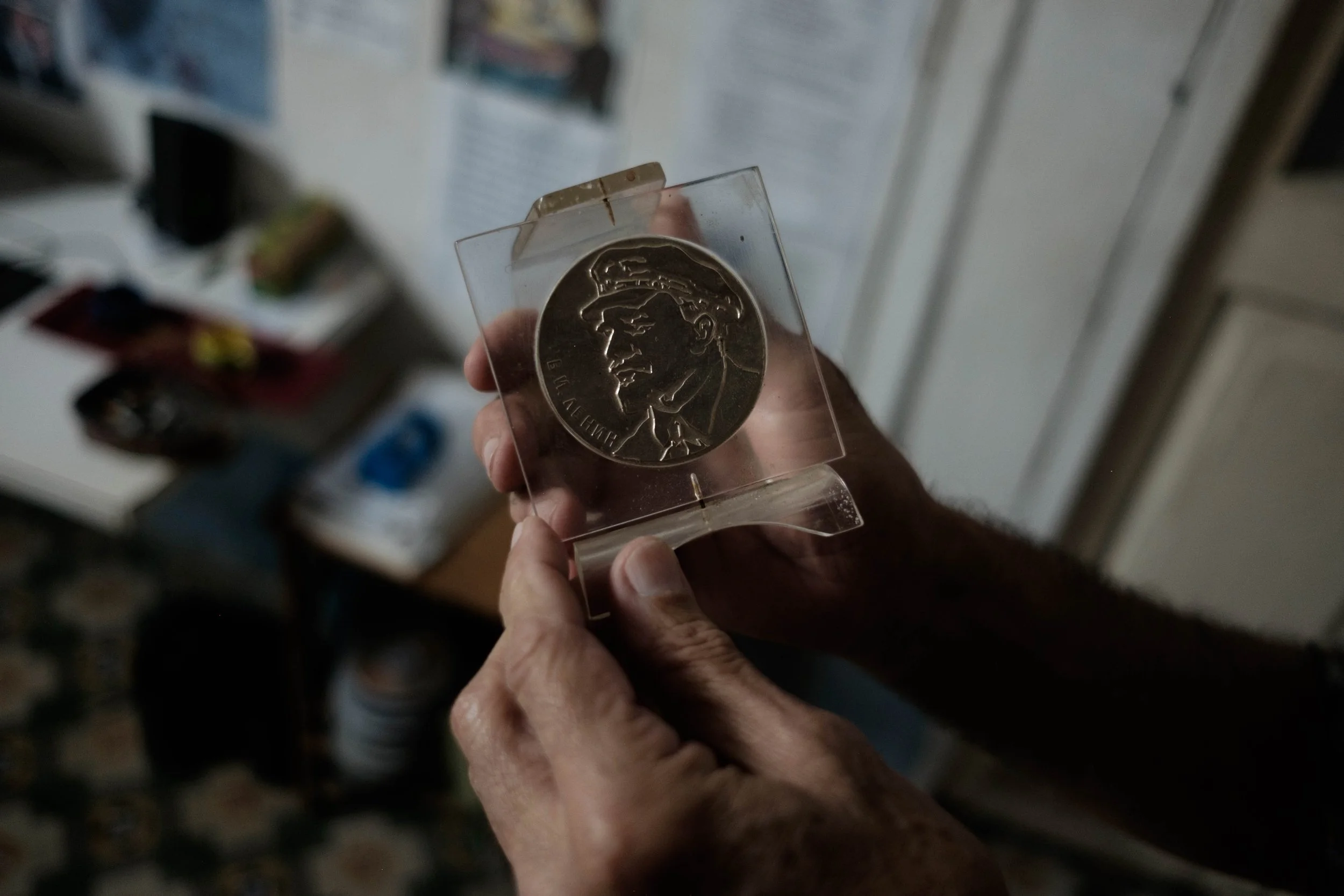
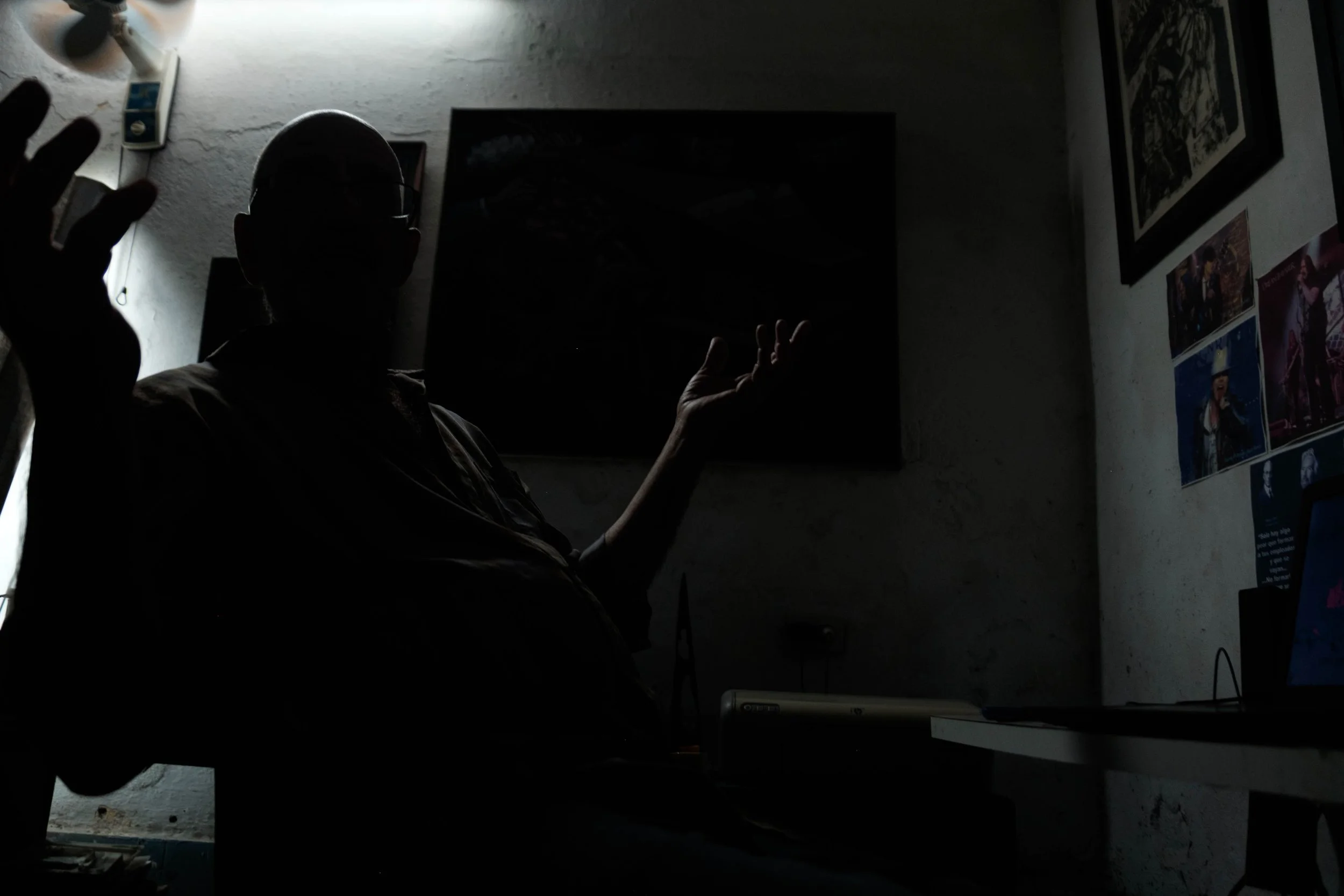
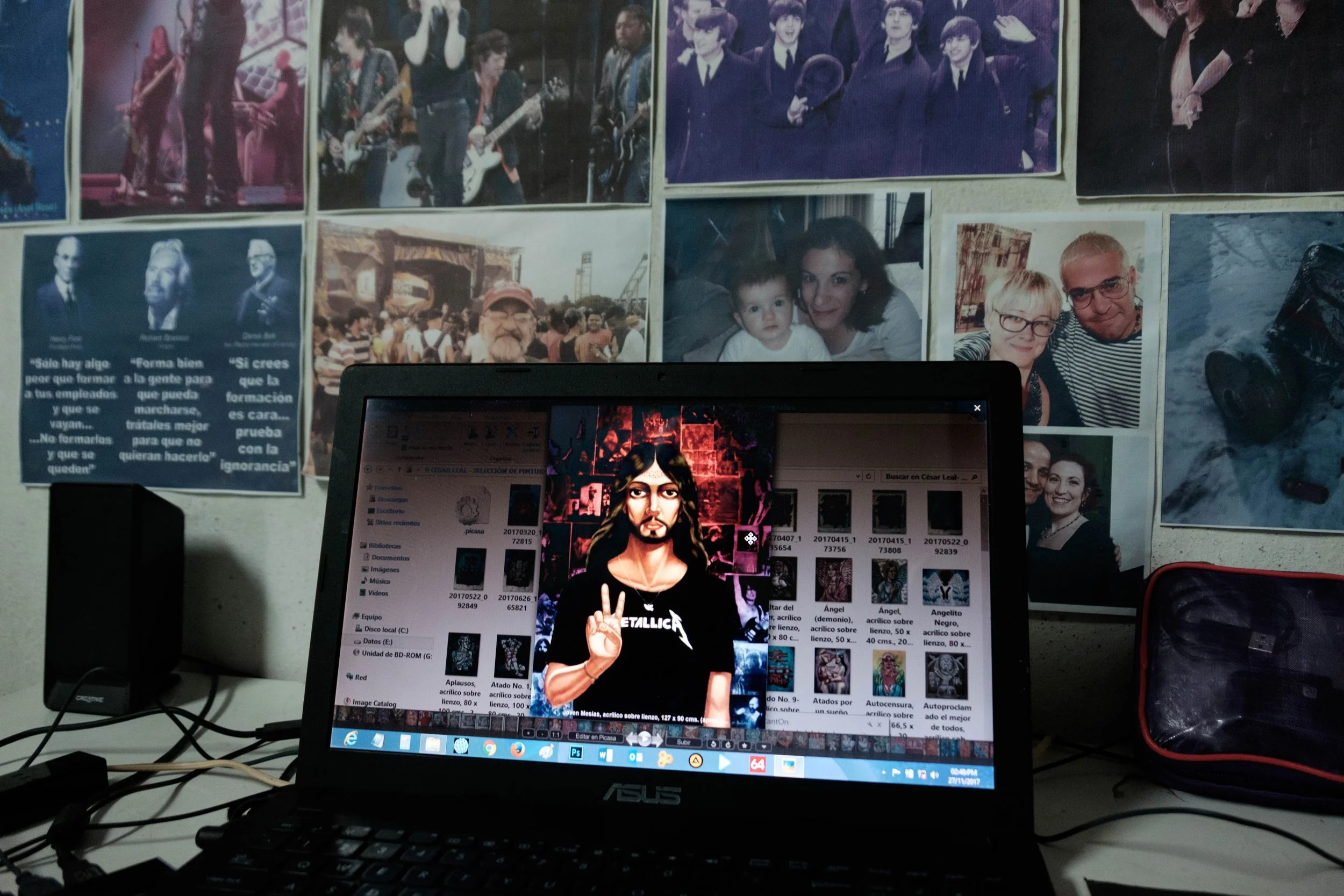
Above his desk: a self-portrait. Photographs of his children — his older son and daughter, both in the United States. A Lenin medal. And written out by hand: quotes from Dostoyevsky, Henry Ford, Richard Branson.
Where most Cuban homes display a portrait of Fidel or Che, César had hung a black-and-white photograph of Elvis.
Food rationing cards in the kitchen. Fifty hours of internet per month — slow, but enough to stay connected.
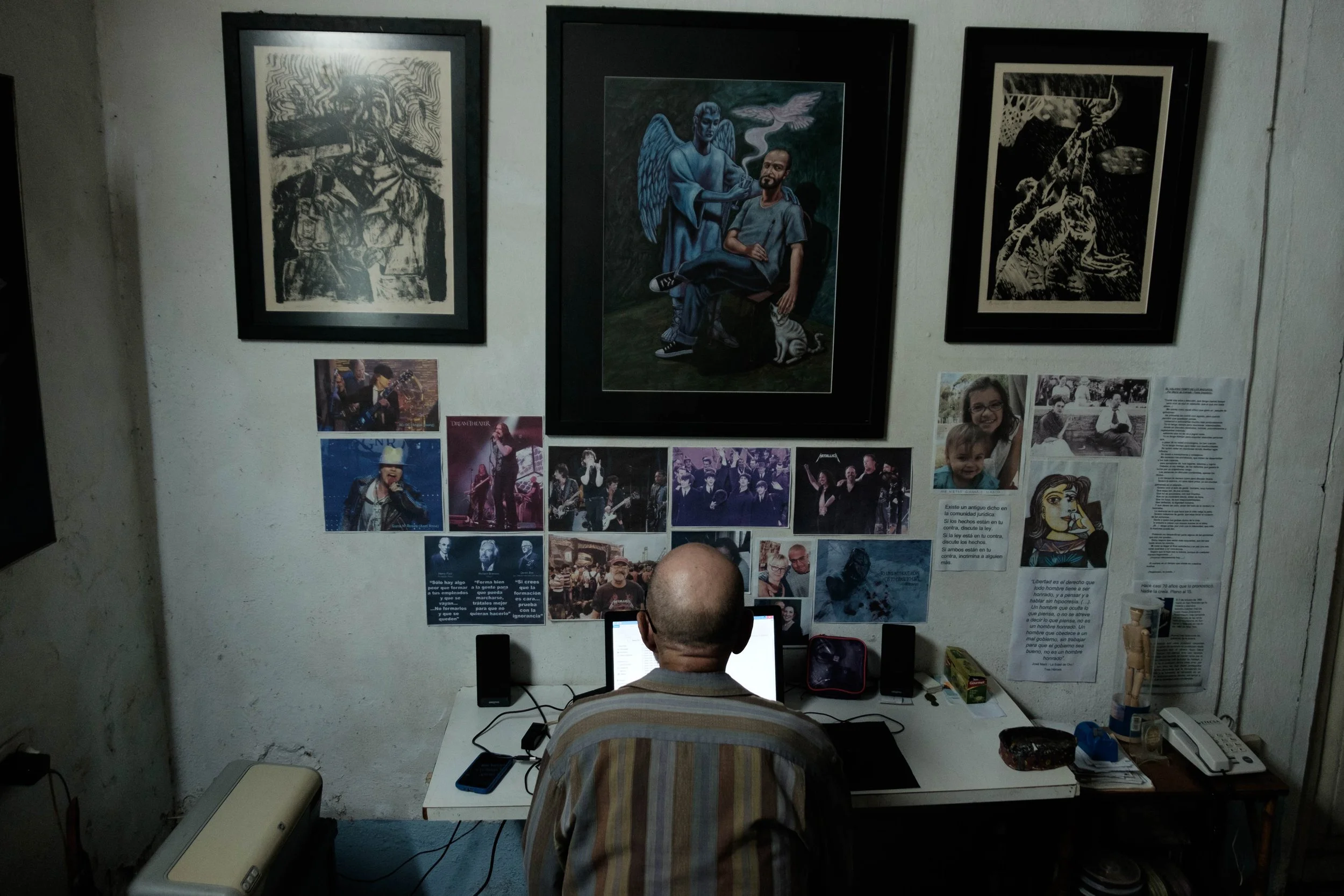
The desk — self-portrait, family photographs, handwritten quotes.
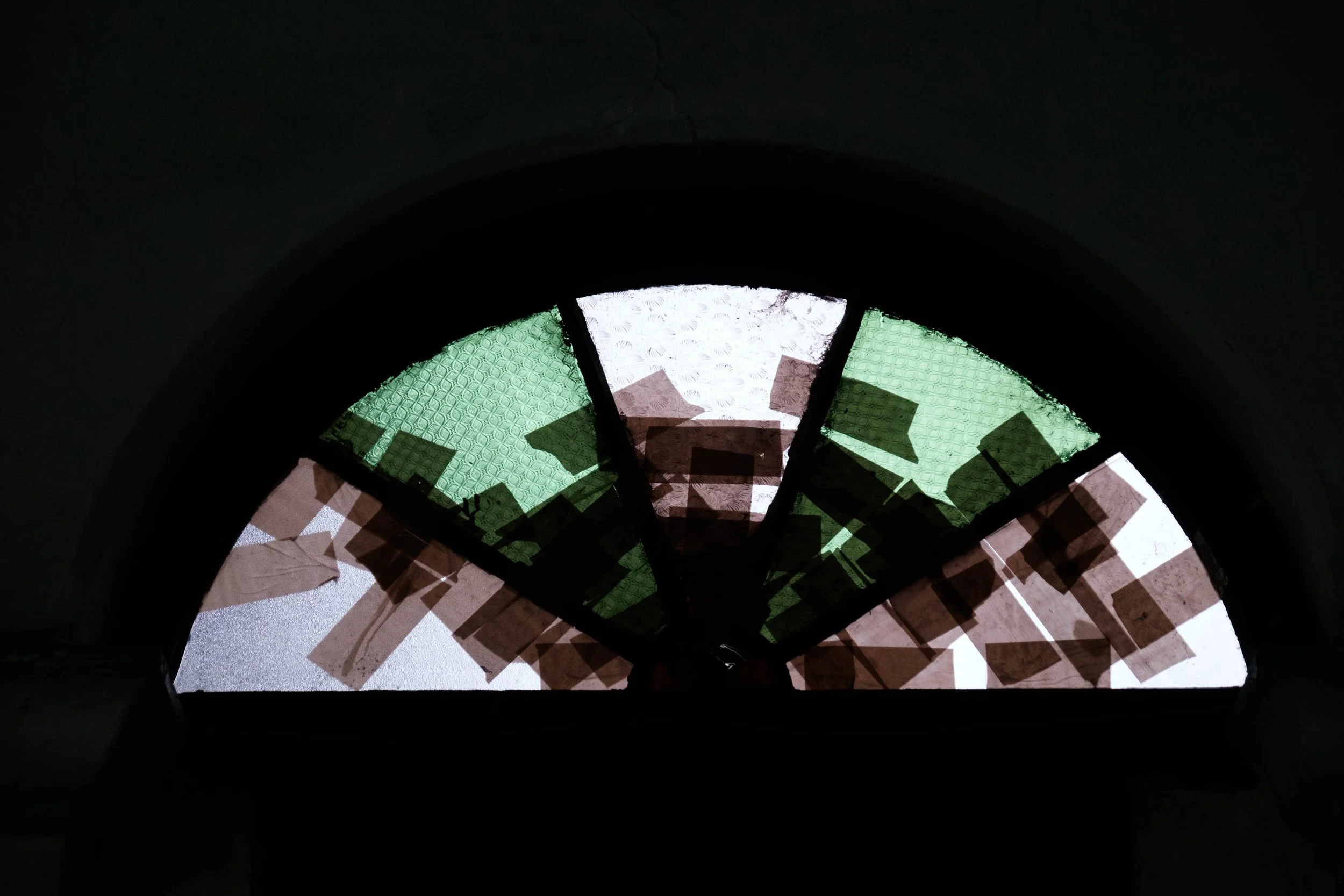
The work
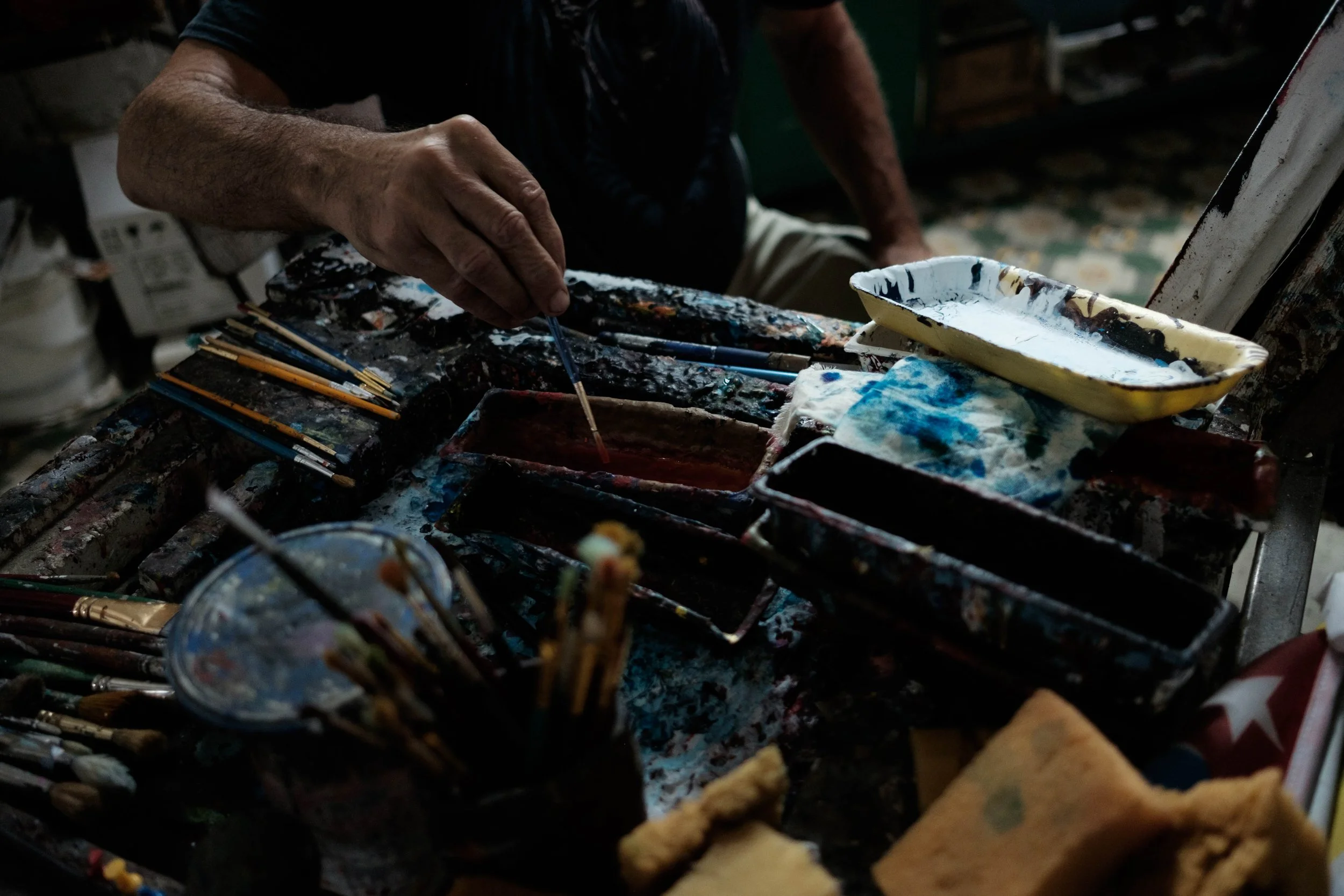
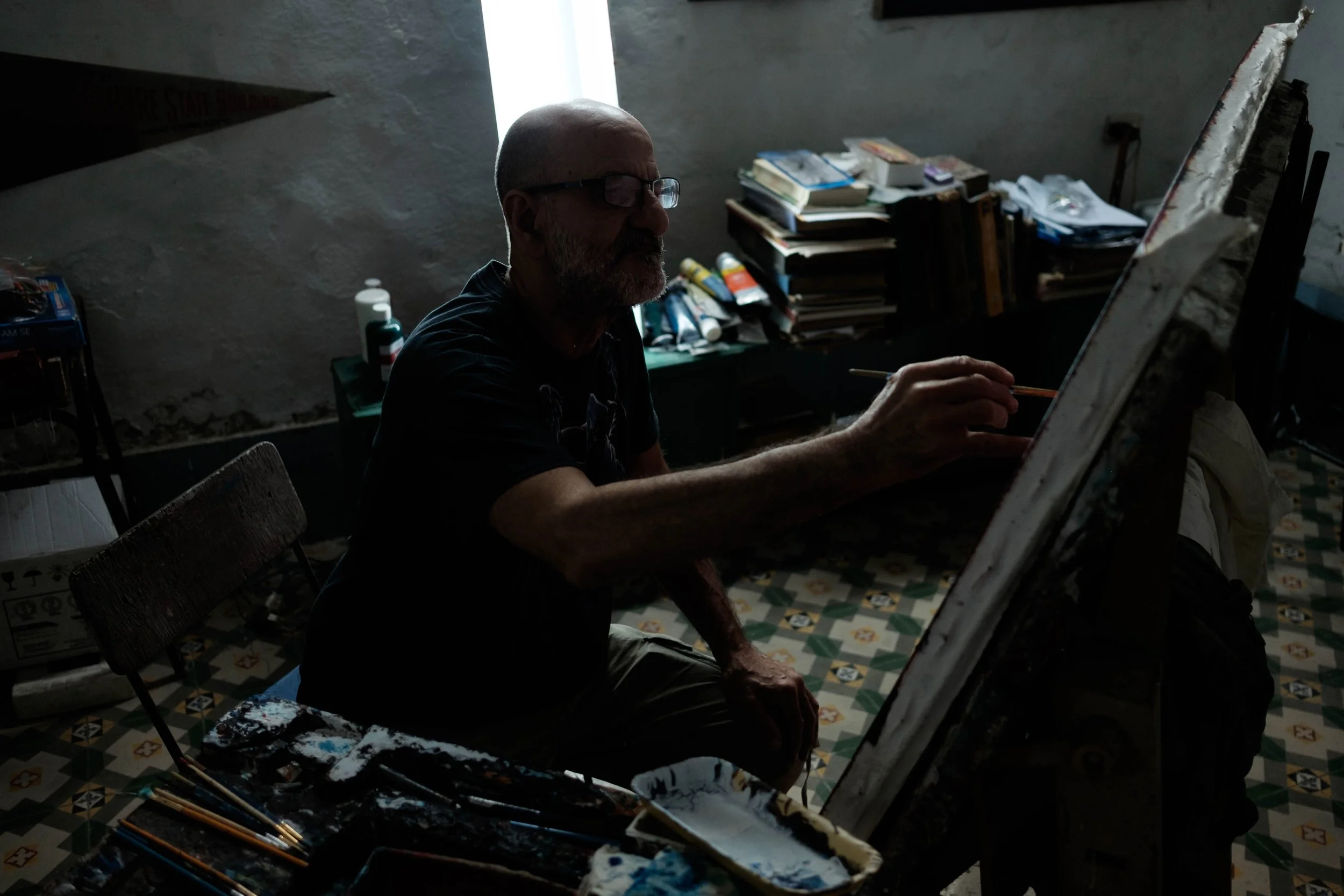
While I was there, he finished a painting.
He had trained formally: the National School of Arts in Havana, graduating in 1968. He also held a degree in journalism from the University of Havana — something I only confirmed later, from an obituary. It explained something I'd noticed at the time without quite naming it: the precision of how he talked, the way he paid attention to things.
For one series, he had used a projector to cast a photograph onto the canvas — tracing the image by hand, then painting over it. He had applied this method to a work that now hung in the permanent collection of the National Museum of Fine Arts: Secuencia en una parte, painted in 1972. A sequence showing the stages of a baseball pitch.
I proposed we go see it. He agreed.
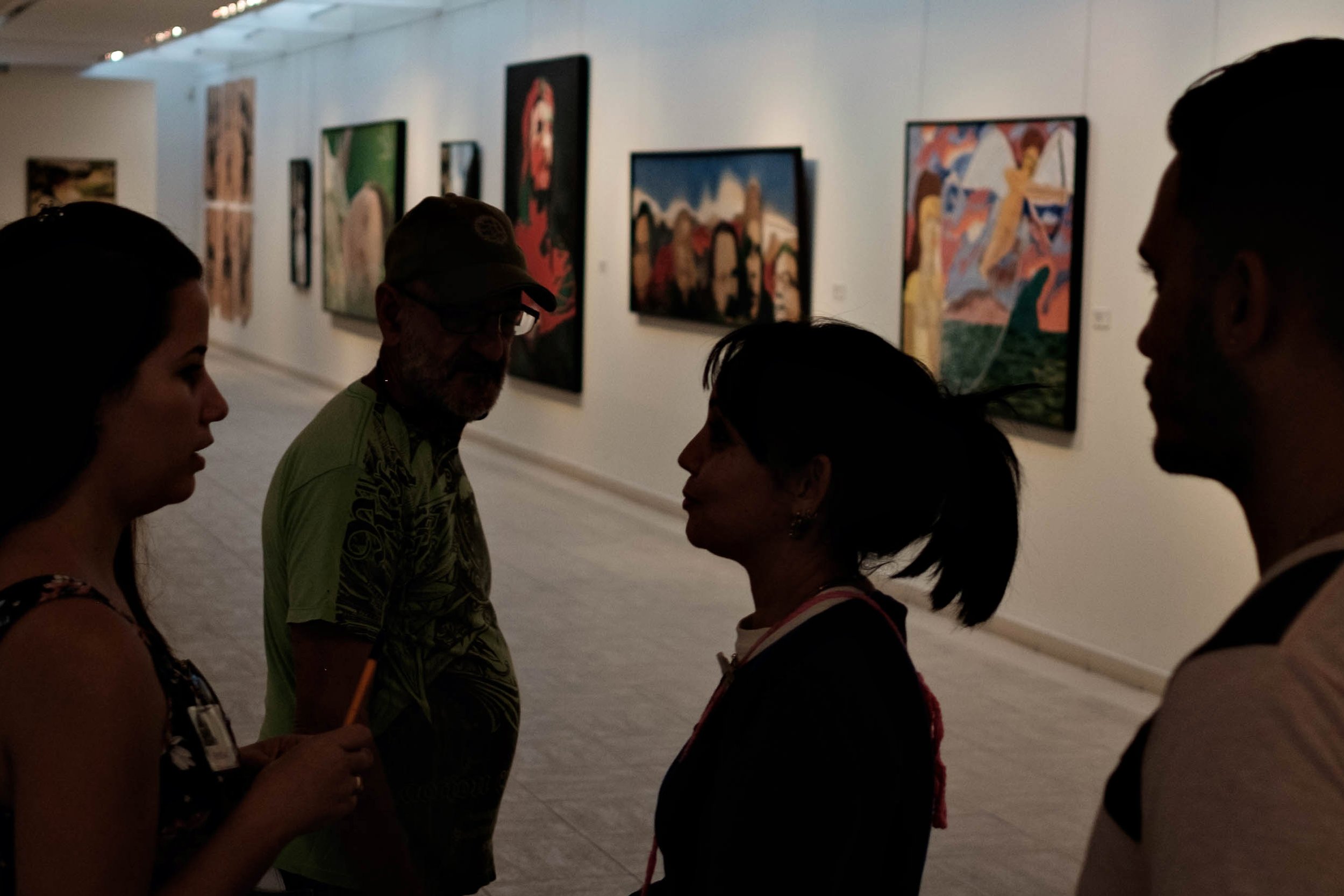
The museum
The National Museum of Fine Arts is in the center of Havana. On the way there, we stopped for ice cream. César bought his own — for him, as a Cuban, it cost a fraction of what it would have cost me as a tourist. He paid for himself without comment.
At the museum entrance: no photographs inside. I explained that I wanted to make a portrait of the artist with his own work. It took a while. Eventually, the administration agreed — on one condition: they would accompany us to the painting and stay while I shot. One photograph: César in front of Secuencia en una parte. No more.
They walked behind us the whole time we were inside.
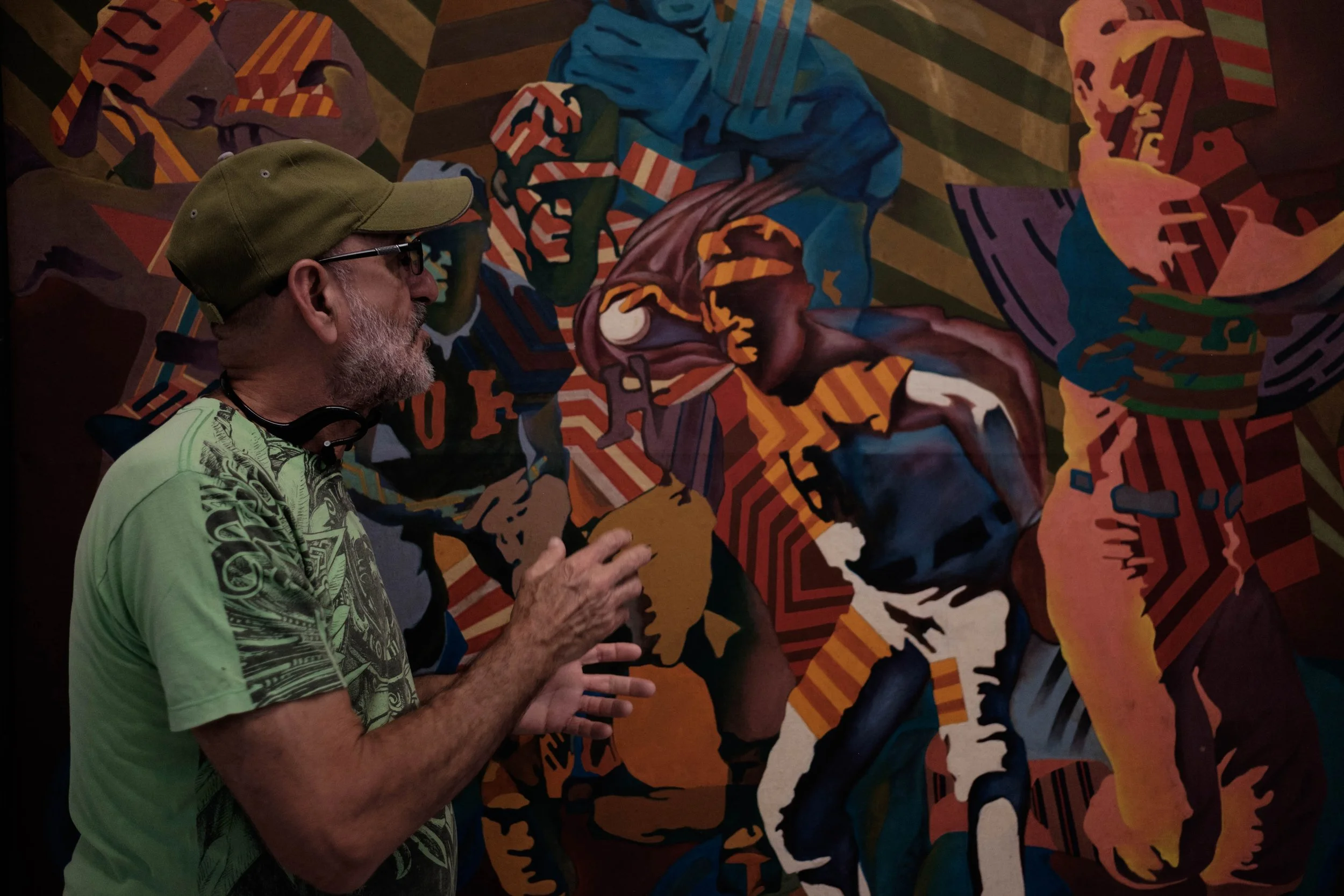
César in front of Secuencia en una parte (1972), National Museum of Fine Arts, Havana
Rock music
Metallica. Nirvana. AC/DC. The Beatles. He listened while he painted. On the wall behind his desk: photographs of favorite bands, pinned alongside the quotes and the family photographs and the Lenin medal.
One of his paintings depicted Jesus as a rock musician.
In March 2016, the Rolling Stones had played a free concert in Havana — half a million people on an open field, just days after President Obama's historic visit. César had been there. He described it as something that had felt like a thaw — people traveling in from other countries across Latin America, a sense of doors opening, of something changing. He said it felt like freedom returning, like the beginning of something different.
A drummer friend lived in Varadero but spent several days a week in Regla. They drank rum together. Cheap rum, sold in plastic bottles and tetrapak cartons from the private café nearby.
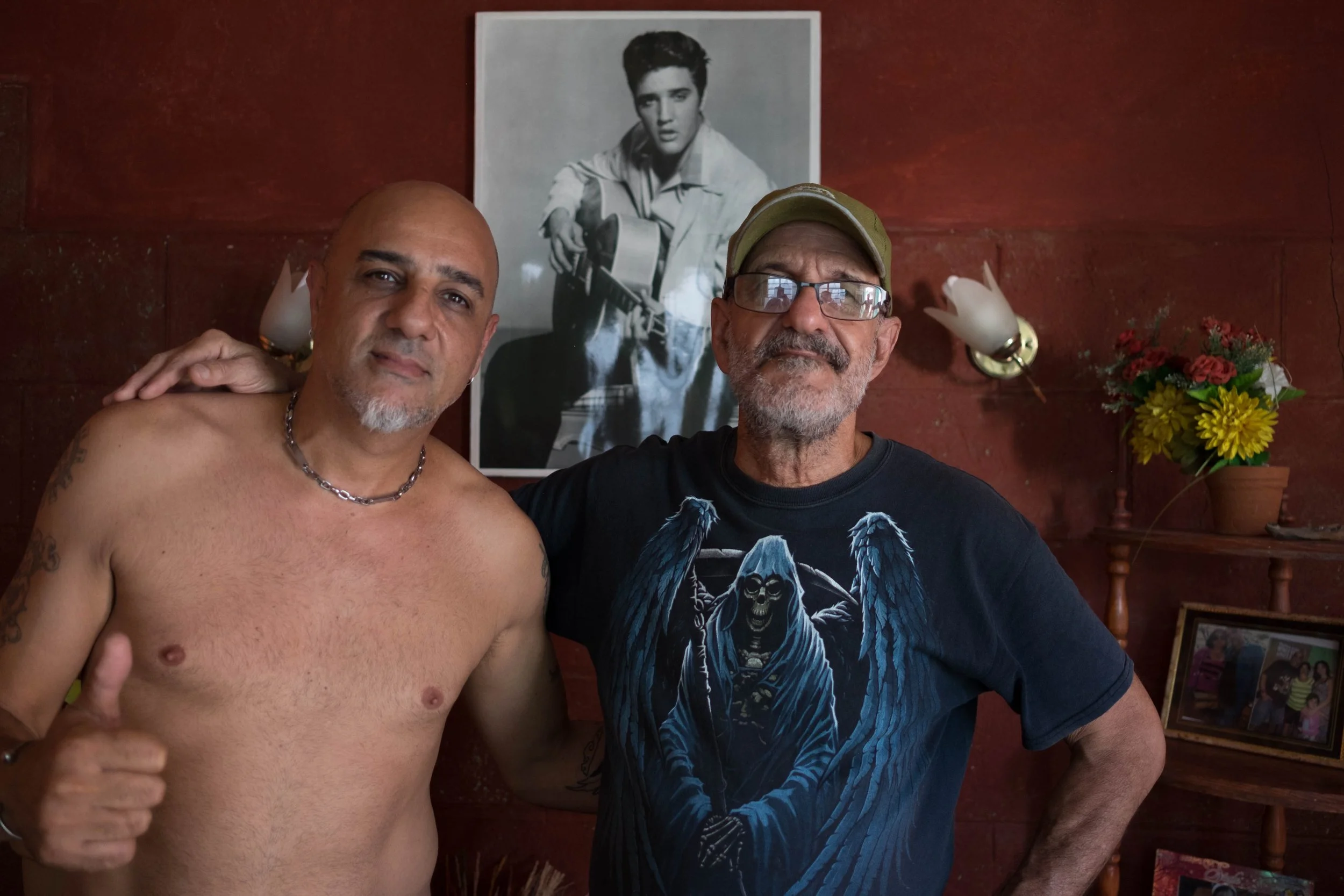
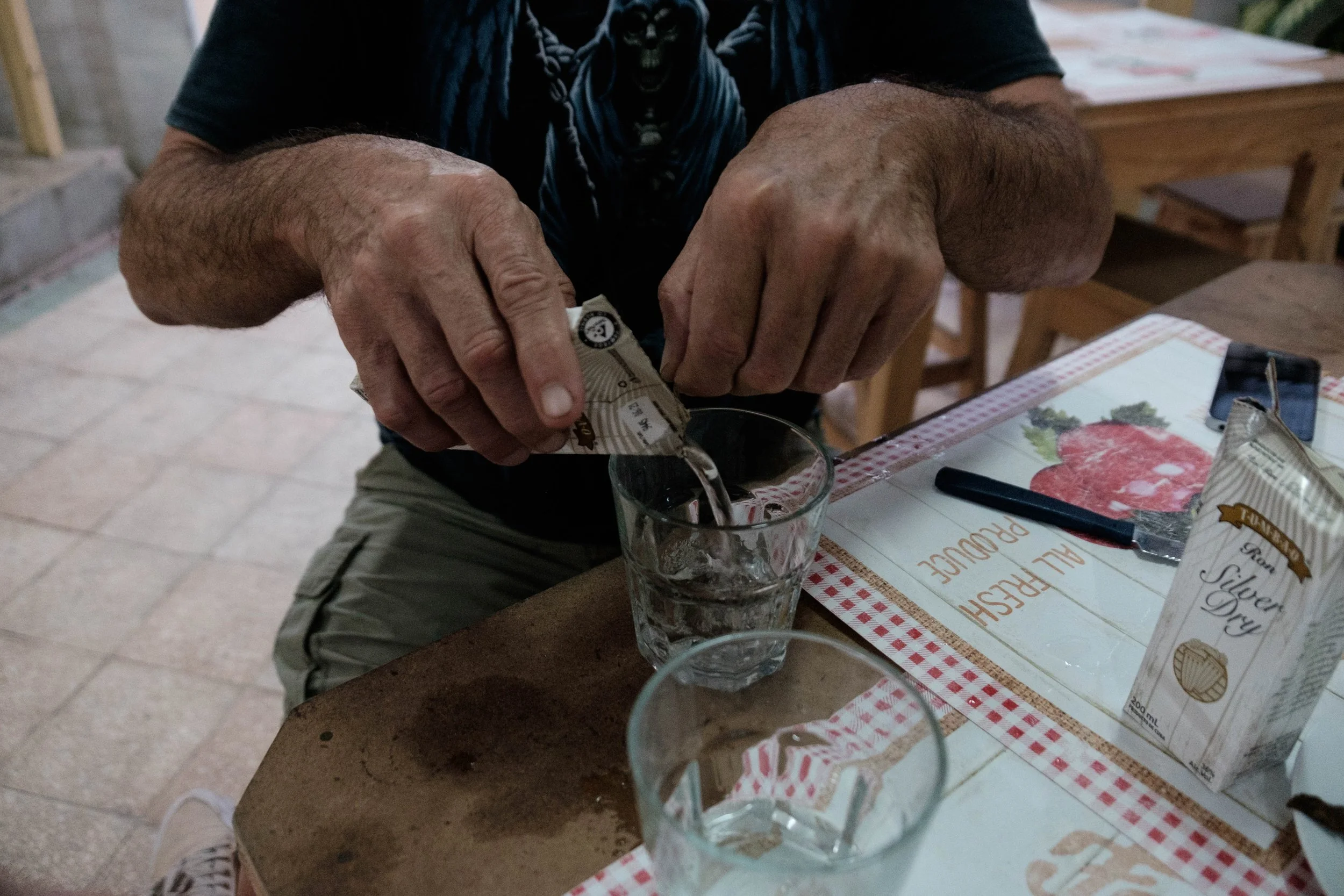
After the museum, we walked through the streets of Havana. Then back across the bay to Regla, through the streets of his neighborhood, into a bar. He ordered rum. The kind that comes in a PET bottle, poured into a glass without ceremony. We drank and talked.
He communicated in what he had: some English, some gestures, a willingness to keep going. We managed.
Before I left Cuba, I went to a shop and bought him a bottle of Havana Club 7 Años. A gift for the new year that was coming.
He thanked me. We stayed in touch for a while after that — Facebook messages, occasional check-ins. Then less. By 2021, we had stopped.
* * *
I kept meaning to finish this. I selected the photographs more than once. I wrote a first paragraph and stopped. I told myself I would come back to it.
His work is held in more than fifty institutions and private collections across Europe and America. One painting hangs permanently in the National Museum of Fine Arts in Havana. He was 76.
Born in Sagua la Grande, Villa Clara, 1948. Buried at Colón Cemetery.
These photographs were made in November 2017. He never saw them. This is what I should have sent him years ago.