Underwater — Tekirova, 2026
This is our third summer at Marti Myra, in Tekirova. The first year I was recovering from lung surgery, so diving was a careful thing — a few shallow dives with the kids, nothing ambitious. Last year my older son Misha and I trained properly and passed our CMAS certification. This year I brought a camera down with me.
The kit
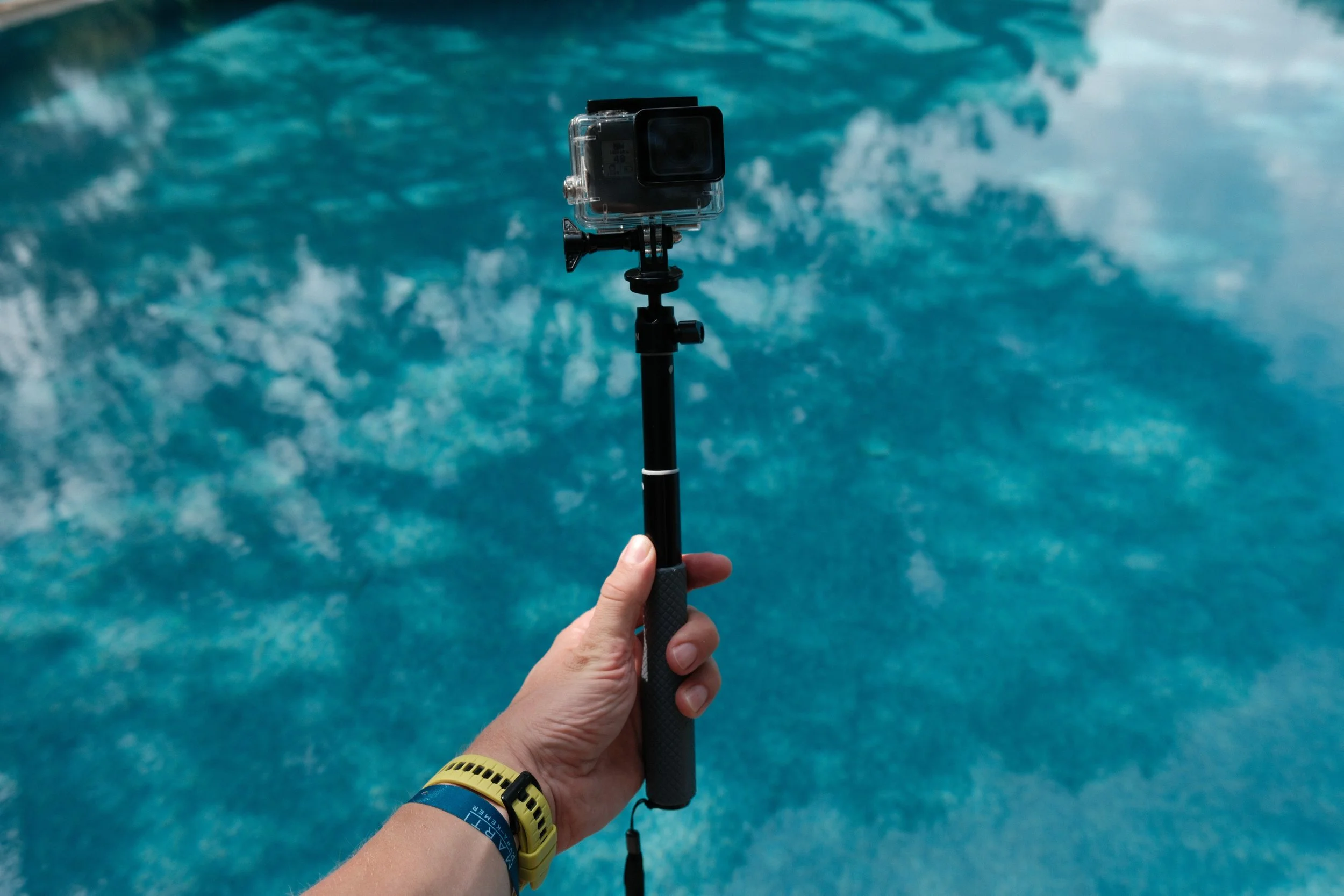
My underwater kit is modest.
A GoPro Hero 6 — old now, but it still takes a picture, and it turns out you don't need much more to start.
A third-party housing from Redtron, instead of the original one, which is impossible to find these days.
Anti-fog inserts, which matter far more than you'd expect — the difference between a clear frame and a fogged, wasted dive.
A selfie stick, which underwater has nothing to do with selfies: it's reach, and it's a way to hold the camera steady in moving water. I wanted GoPro's own Handler, but it wouldn't arrive in time, so I took the Telesin version instead. It did the job. After a few dives, though, I'd choose a grip that floats — so that a dropped camera doesn't simply keep going.
A red or purple filter is the one thing I'd add. Everything I read recommends one below five or ten metres, and I couldn't find any that fit the housing I'd chosen.
Settings worked for me
I looked for this before the trip and found a few useful resources. This isn't expert advice — just the photo settings I settled on after a few dives.
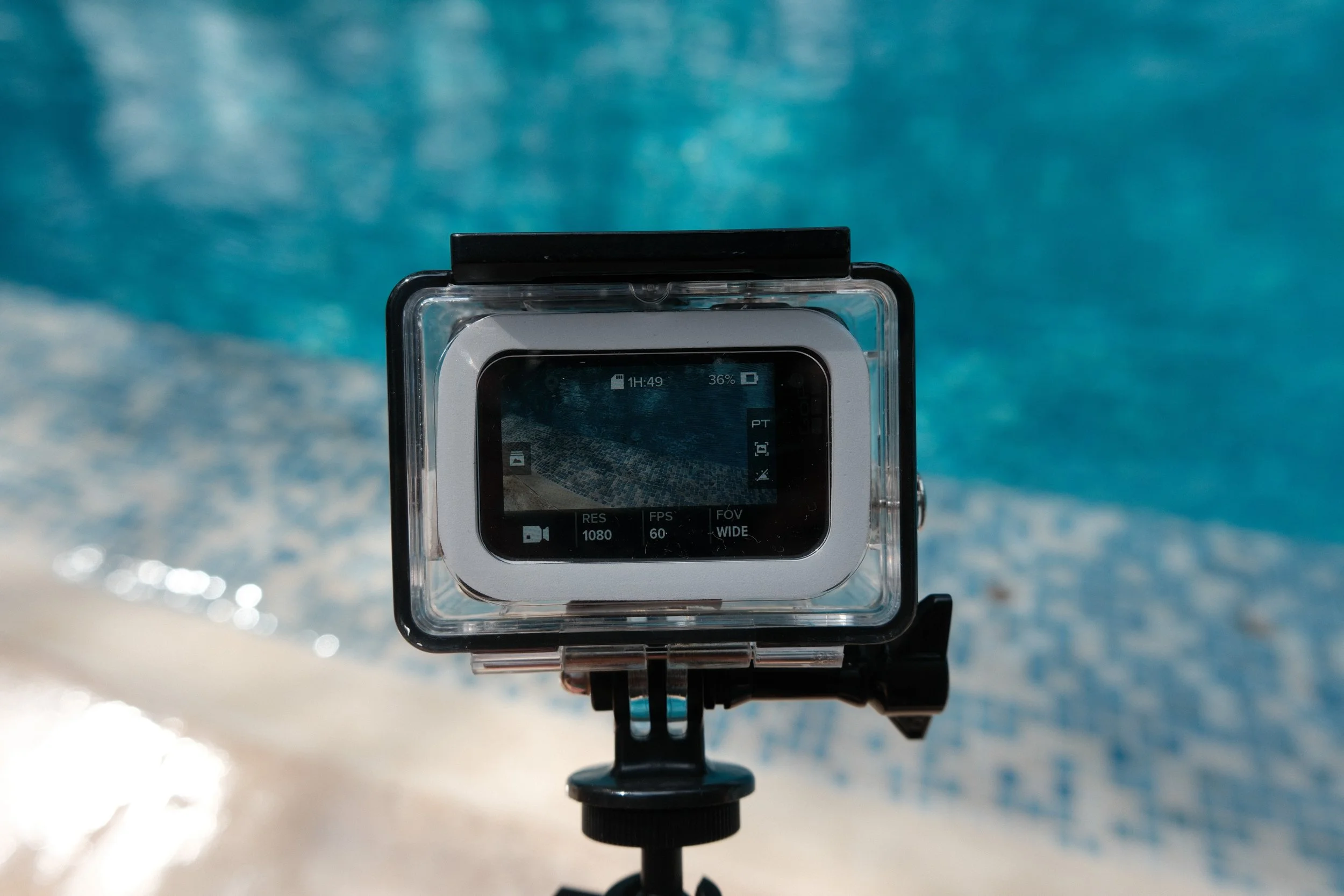
Photo mode, Wide FOV. Protune on:
Shutter — Auto
EV Comp — −0.5
White balance — Auto
ISO — 100 min, 3200 max (went all in)
Sharpness — Medium or High
Colour — GoPro (let’s leave it for JPGs, just in case)
RAW — On
Auto HDR — Off
RAW is the one setting I'd insist on. Without a filter, the colour underwater has to be rescued afterwards rather than caught in the moment — the white balance needs pulling back, the contrast needs rebuilding, and a JPEG simply won't survive that. Shoot RAW and the file gives you room to work; that's also why I left the colour profile on GoPro rather than flat, since nothing is decided by it anyway.
It's also worth setting up Burst with the same settings, at 10/2 or 30/2 — ten or thirty frames across two seconds. I didn't use it constantly, but when there's a lot happening, it's the difference between a shot and no shot.
The important thing to understand: inside the housing you can't change any of this. Once you're down, the only thing you can do is switch between modes — video, photo, burst. So set them up as presets, and give them slightly different values. I kept a wider ISO range on burst than on single photo, which meant that switching modes also gave me somewhere to go when the light changed.
There's no equivalent of the iPhone's live photos here, and the shutter button responds with a lag. Practise with it before you're pointing it at something that matters.
Before you go down
None of this is professional advice — I have very little experience myself. But if you're thinking about trying diving, a few things I'd want said plainly.
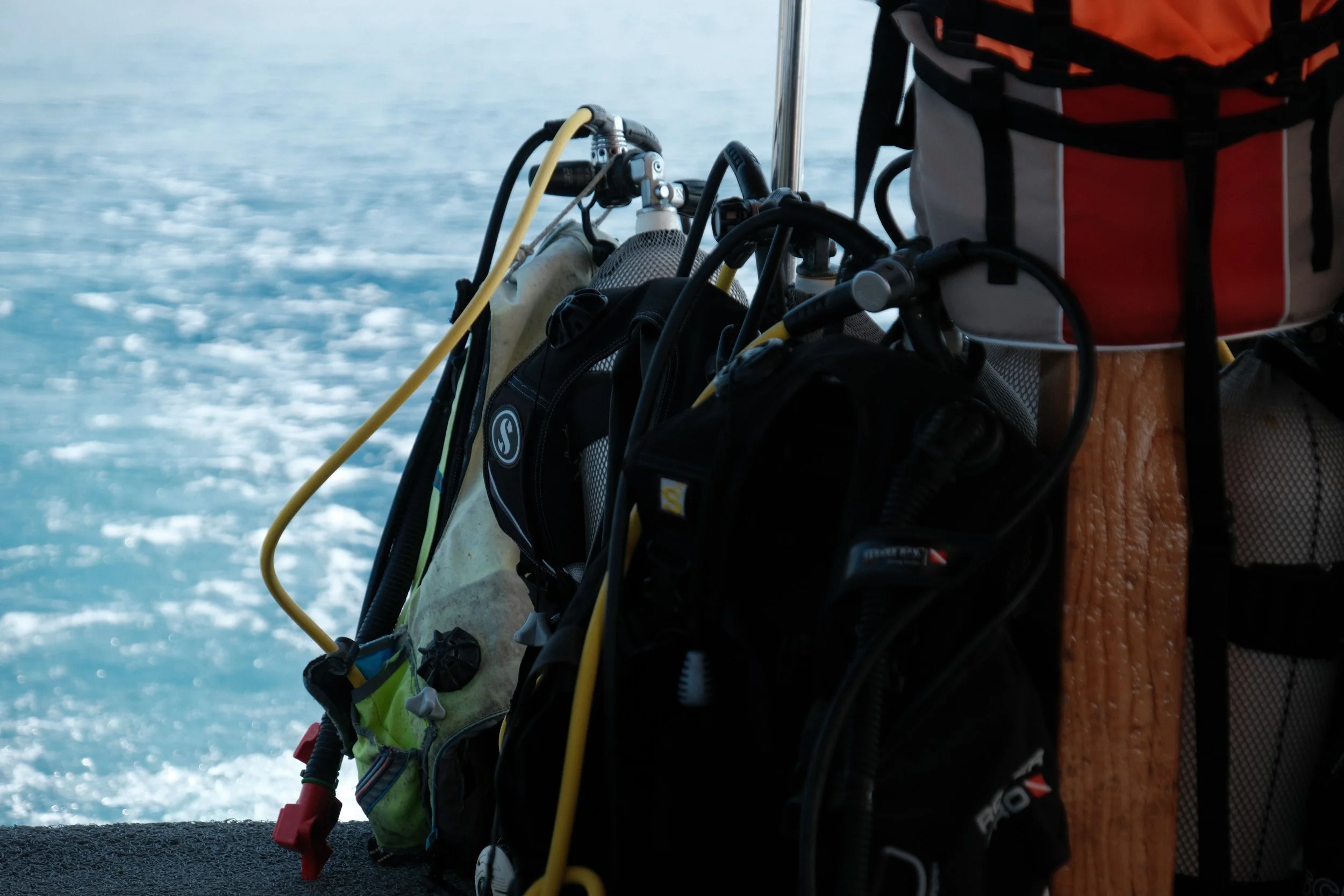
Learn to assemble your own gear. Practise clearing your mask underwater and equalising your ears — not at depth, but in the shallows, or even a pool first. That's where you find out whether it's for you, before the depth decides for you.
And get comfortable moving in every direction: head down, head up, turning yourself around, controlling your speed — all of it without tiring out and without panic. This matters more than it sounds, because the moment you pick up a camera, none of it can occupy you any longer.
Two meditations
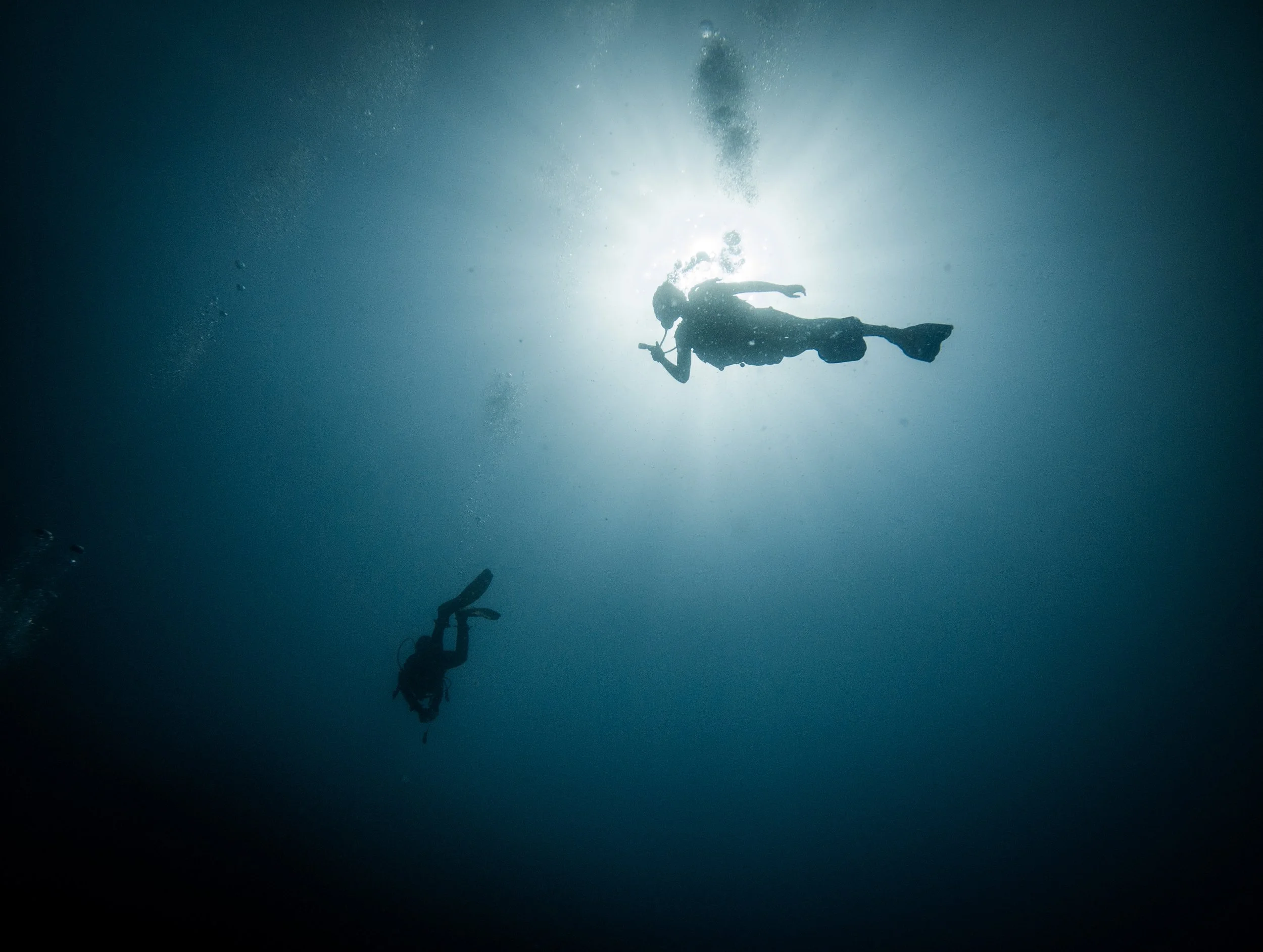
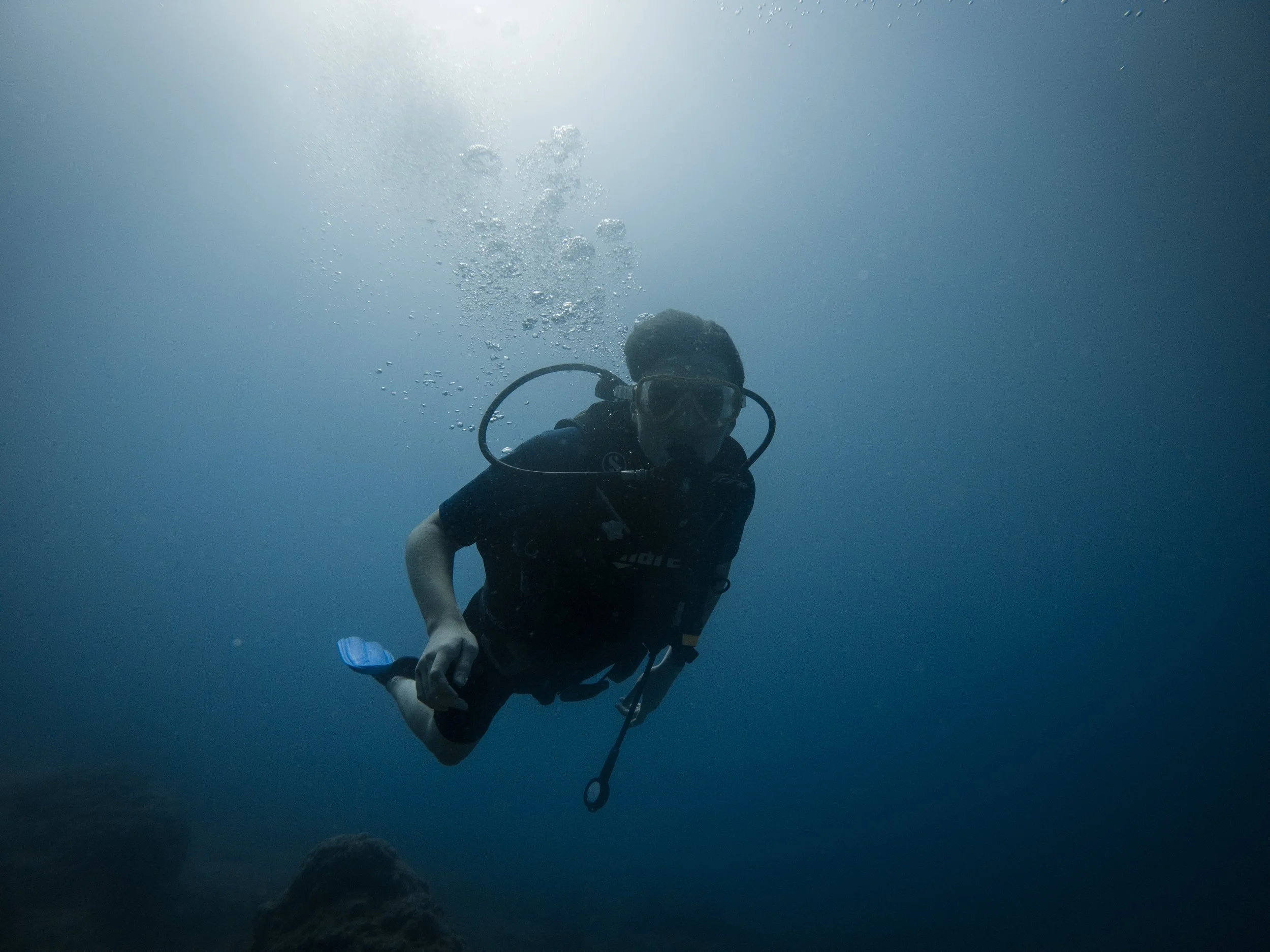
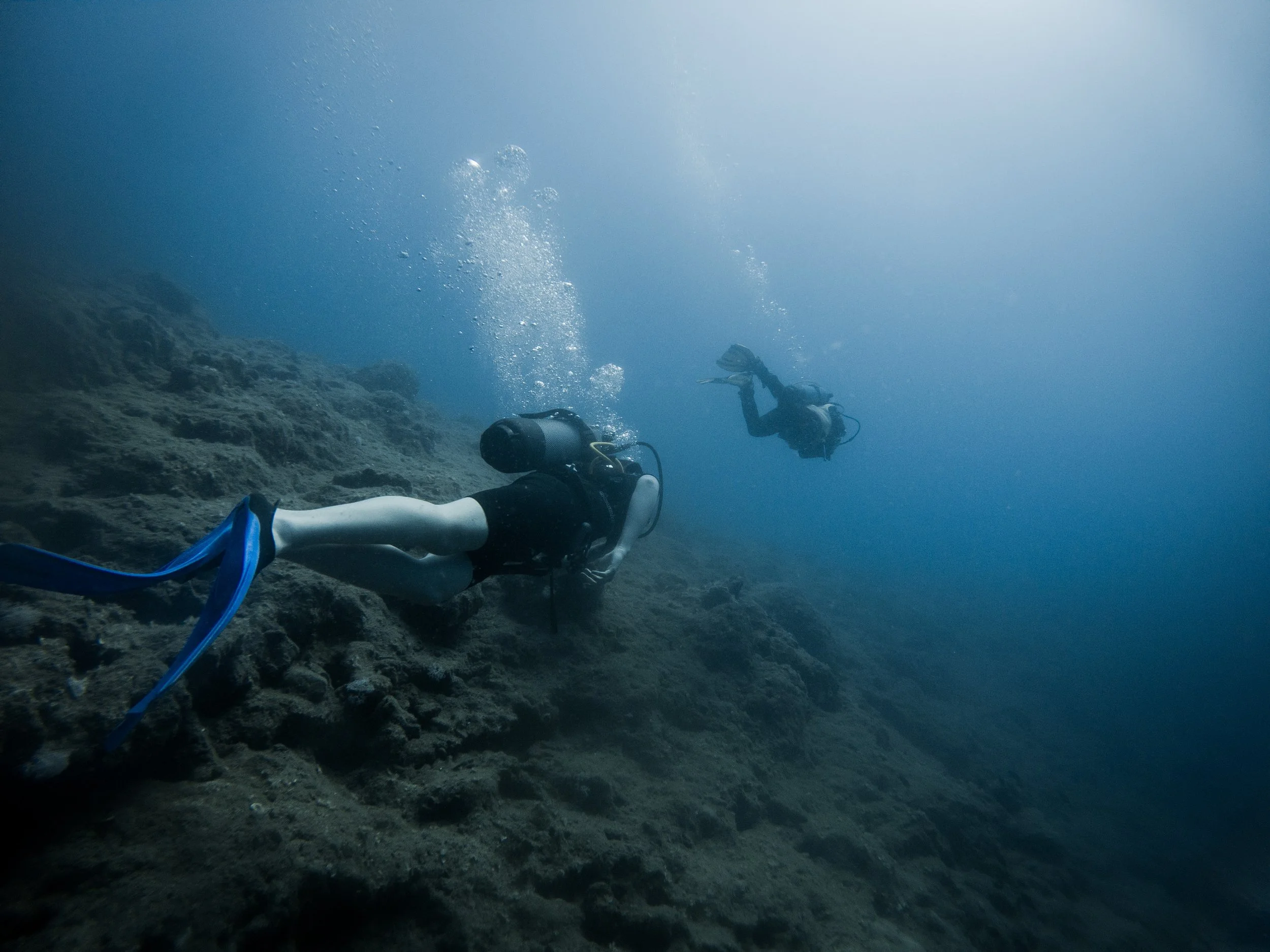
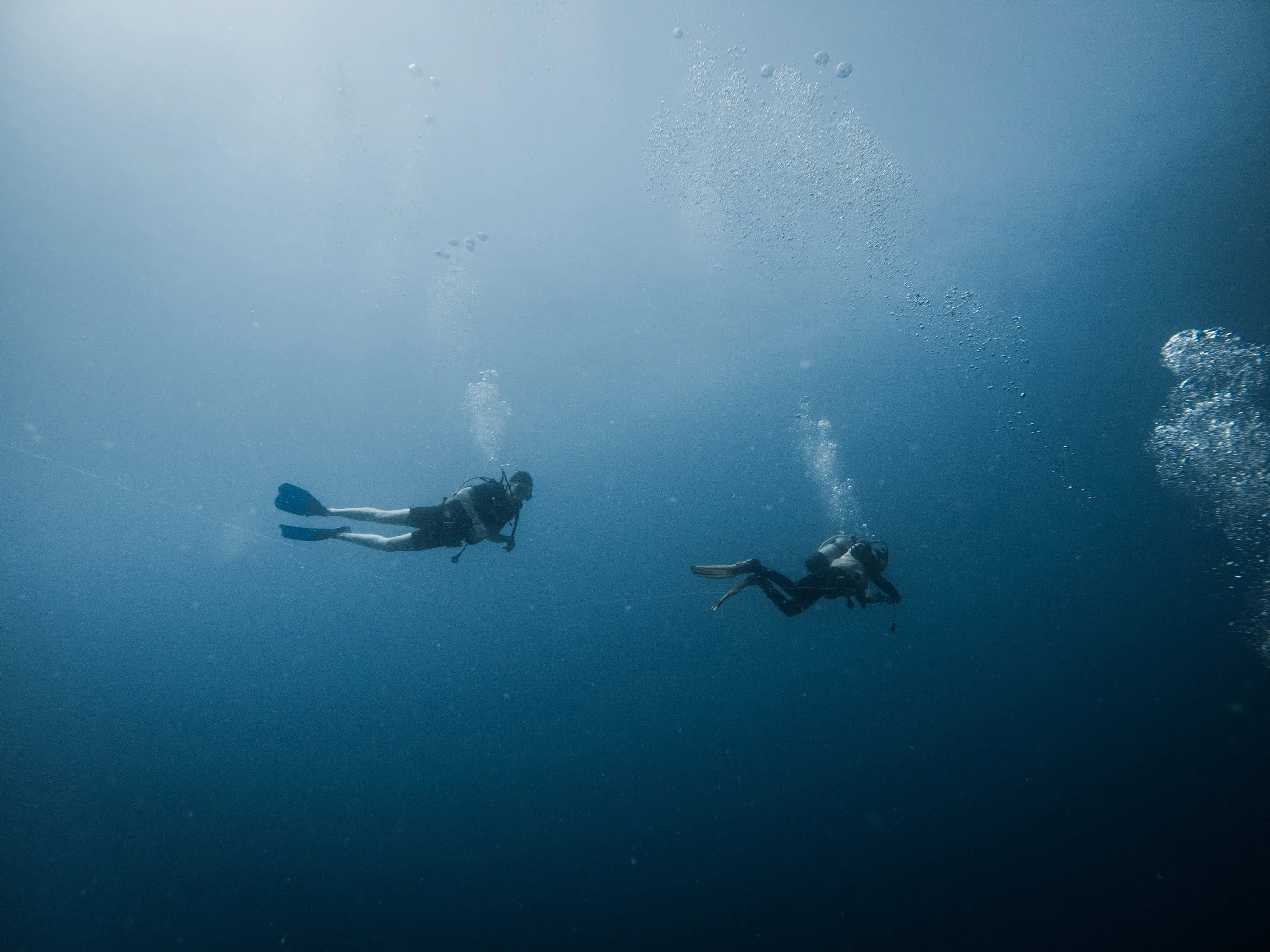
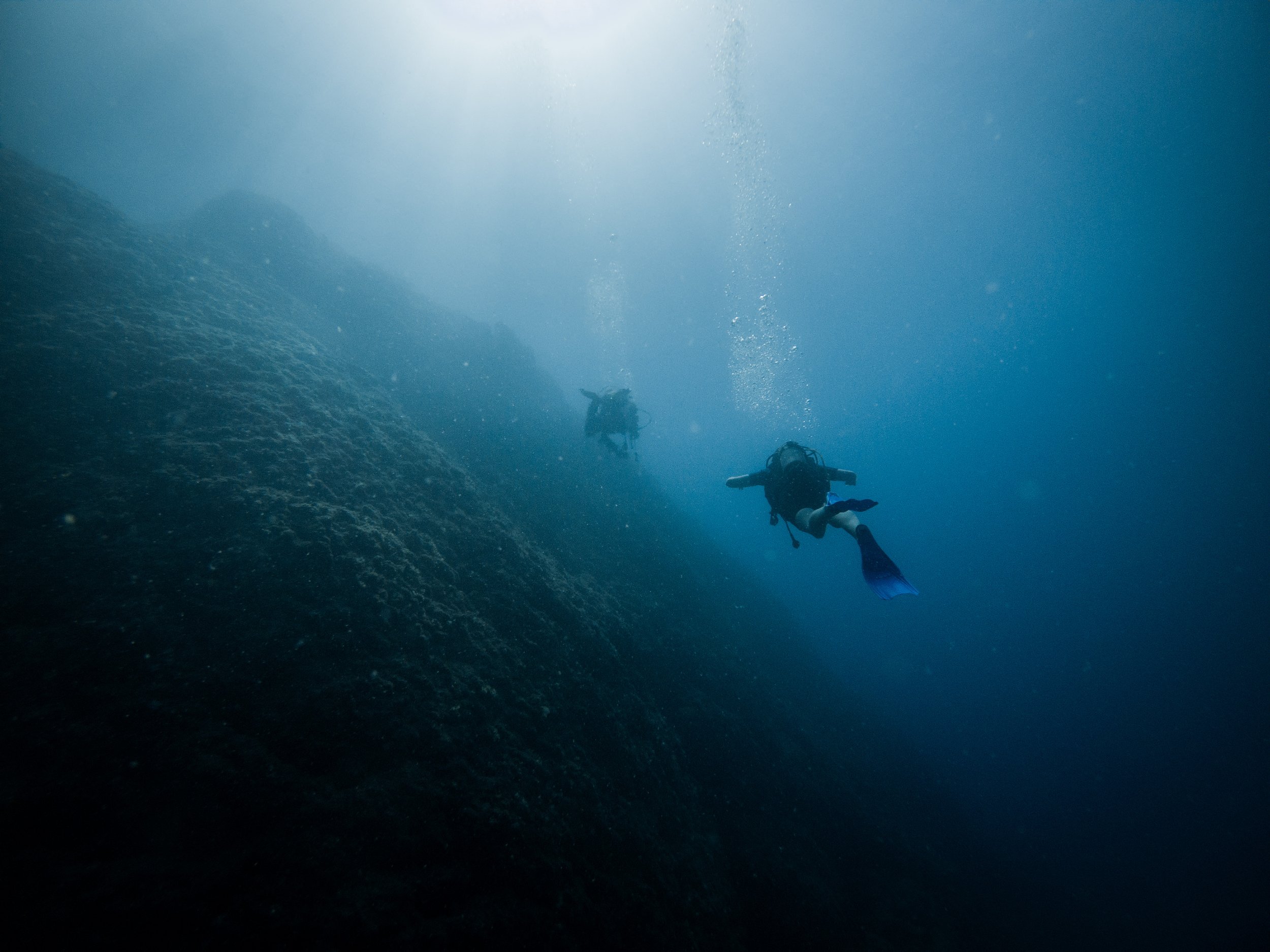
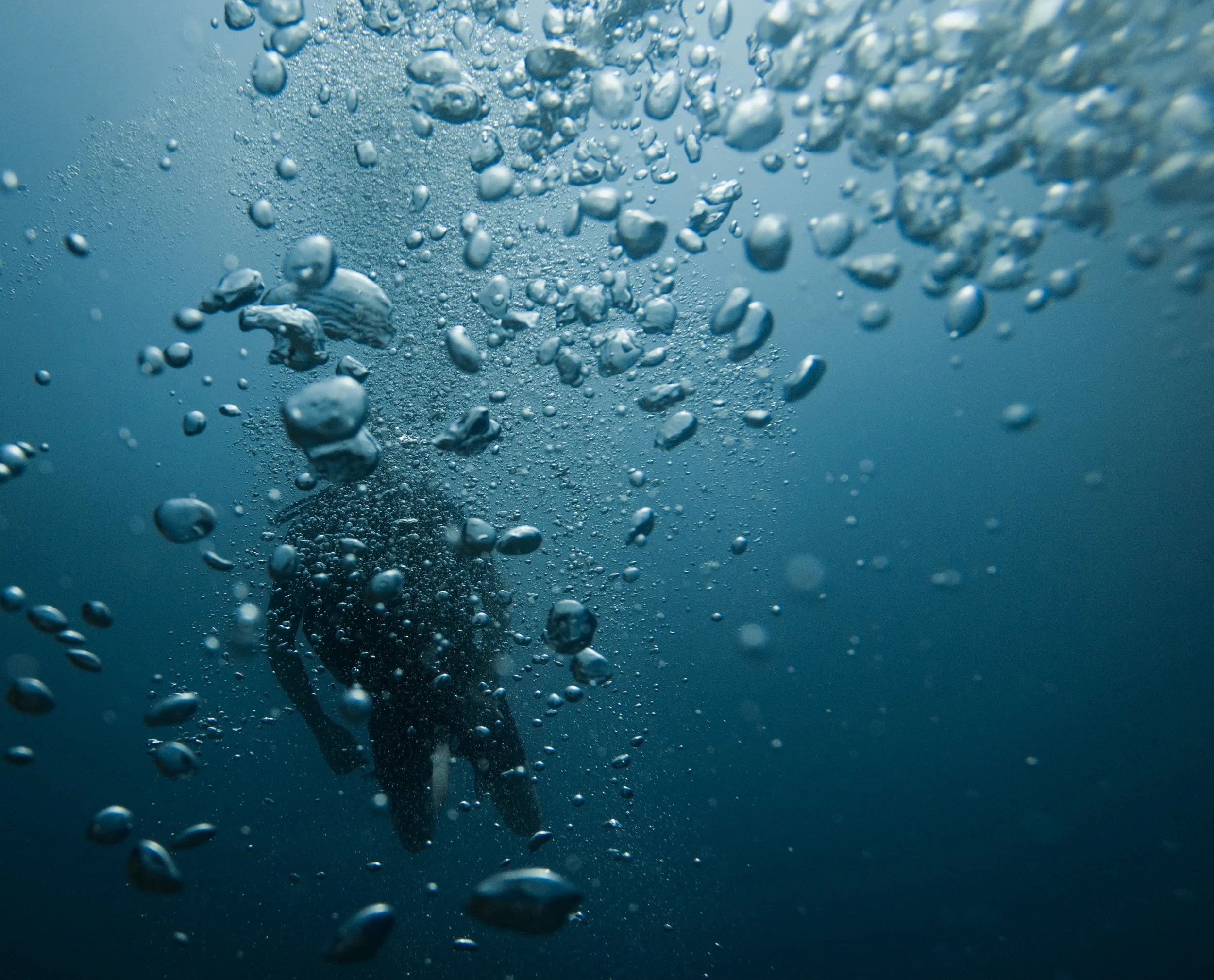
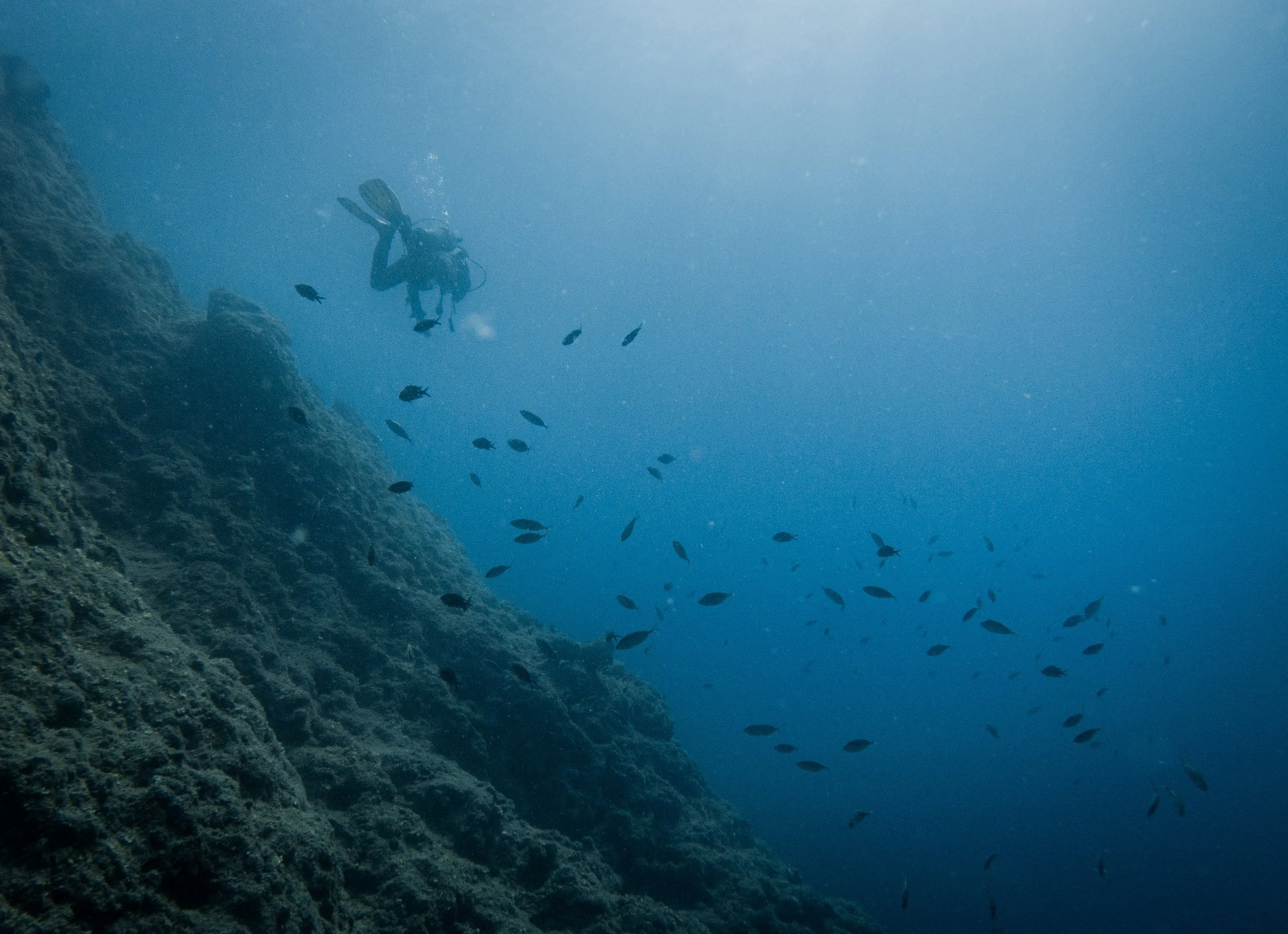
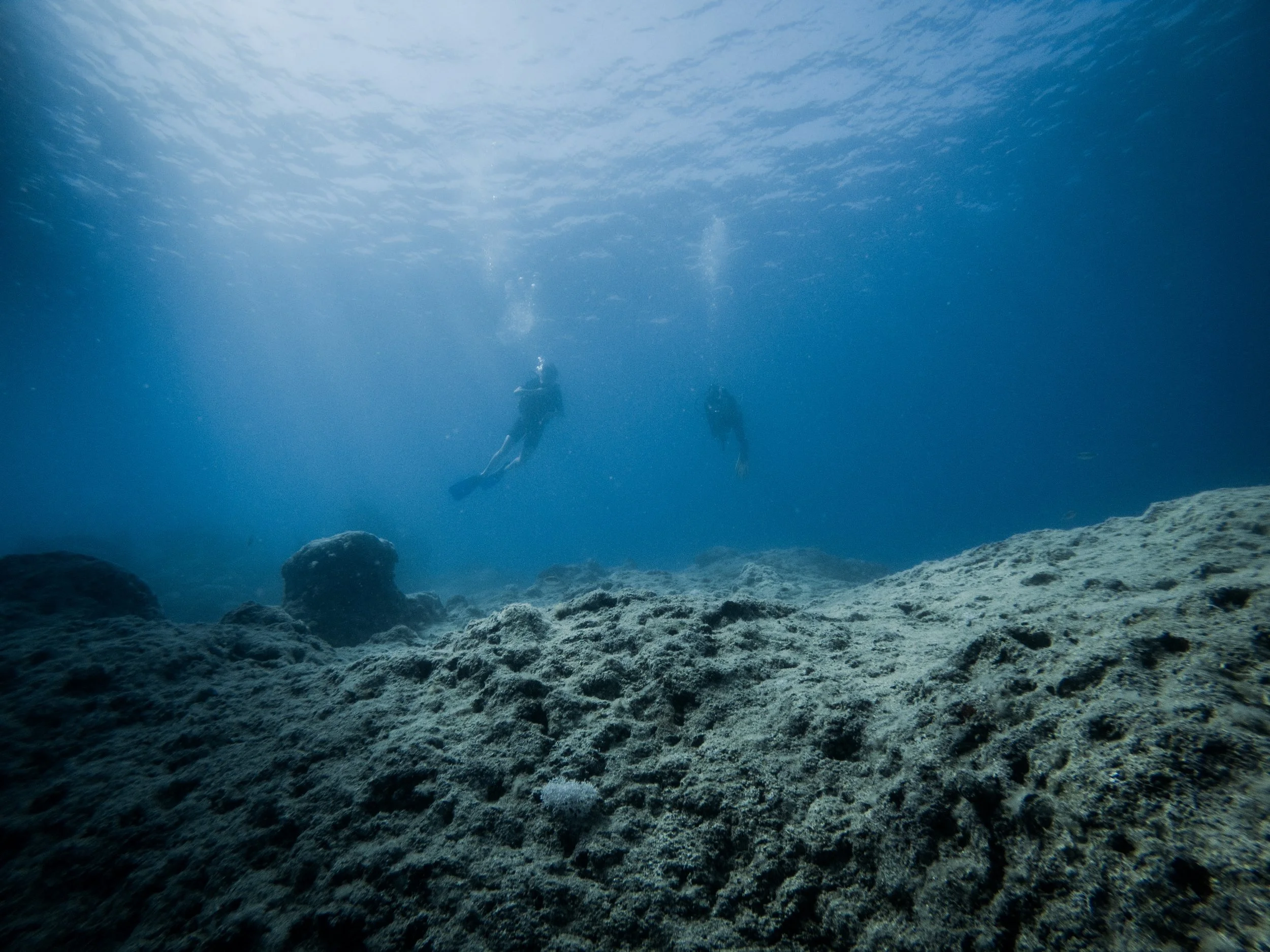
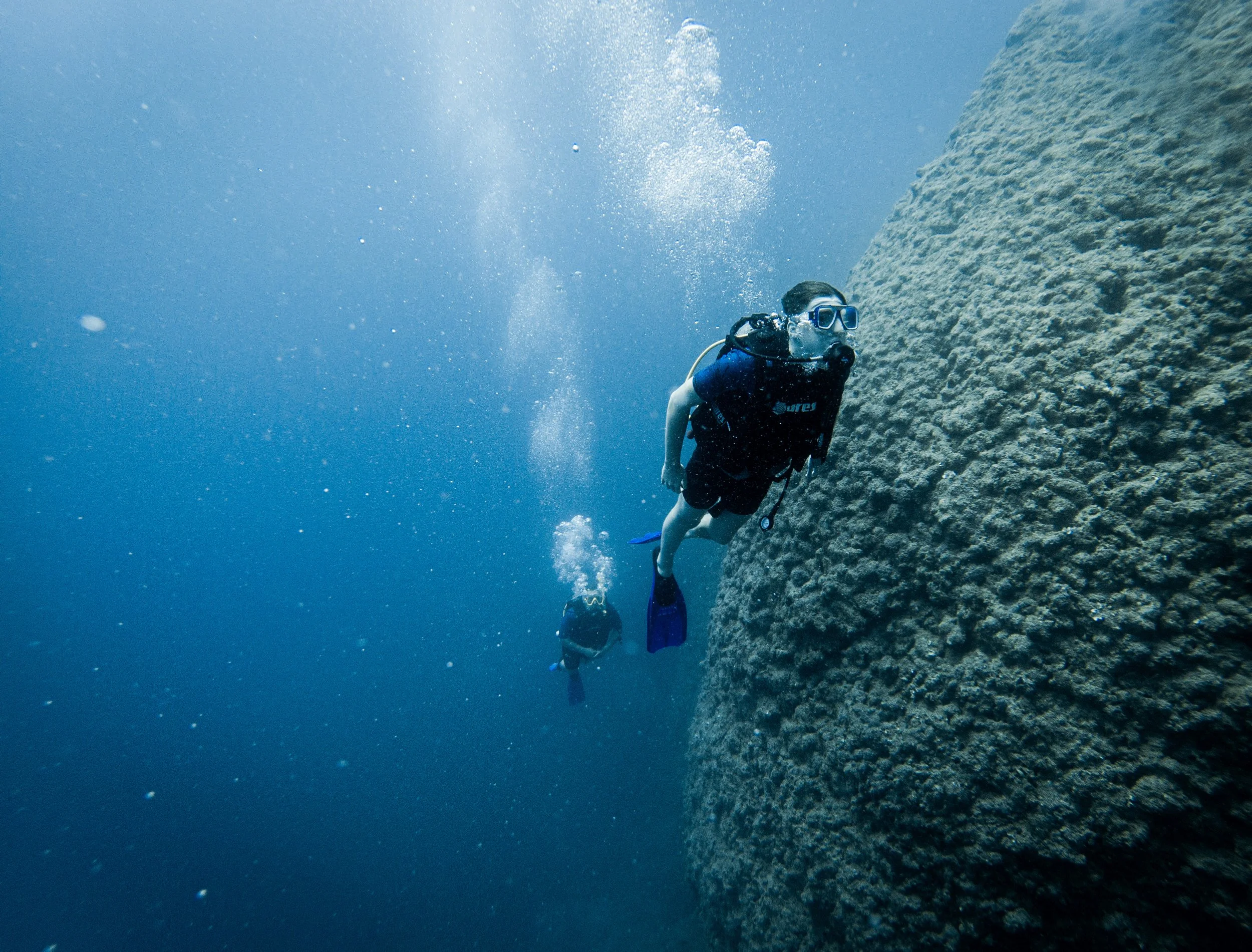
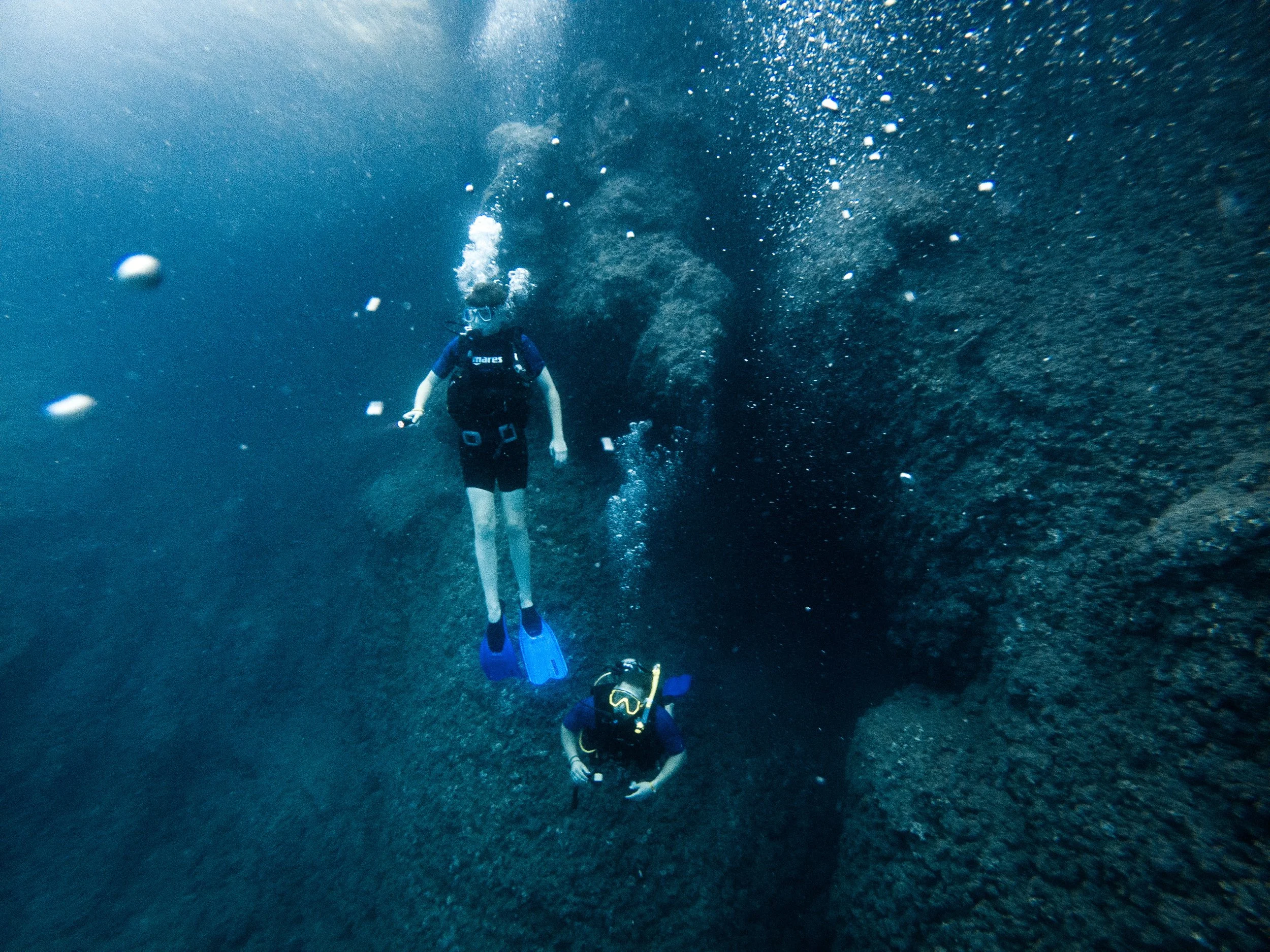
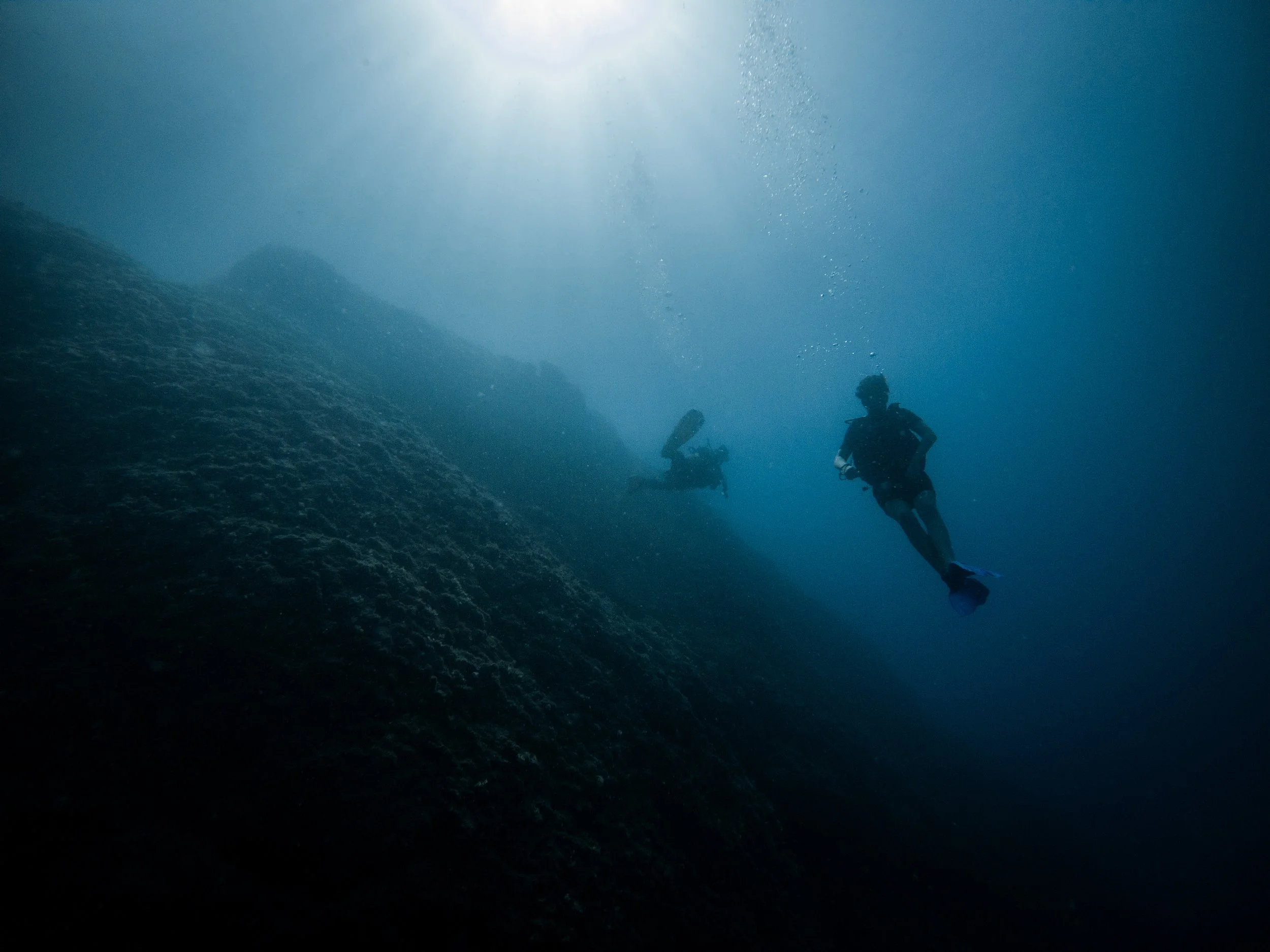
Photography is meditative. Diving is meditative. When the two overlap, something happens that I don't fully have words for yet — I understand now why people give themselves entirely to underwater work.
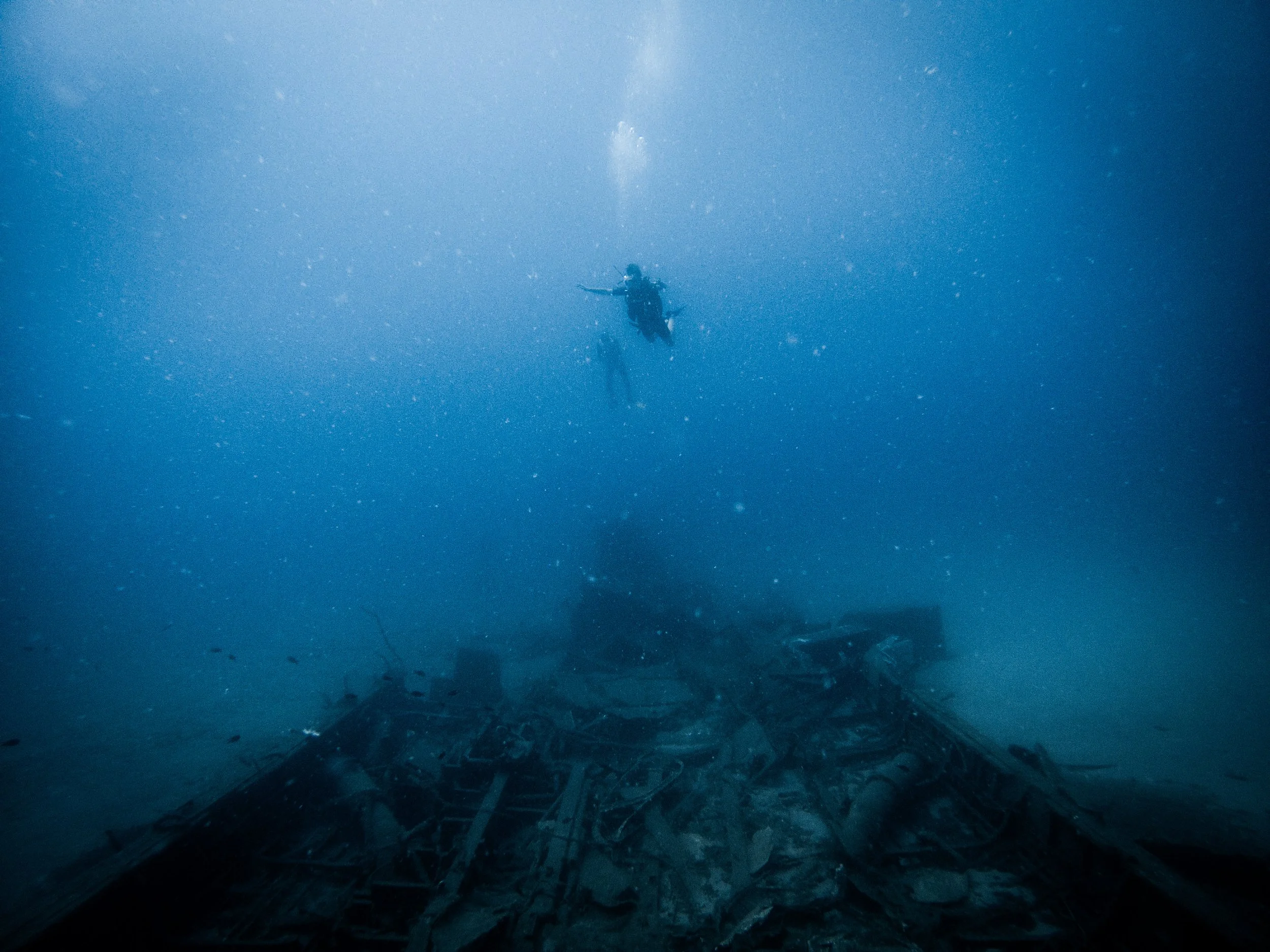
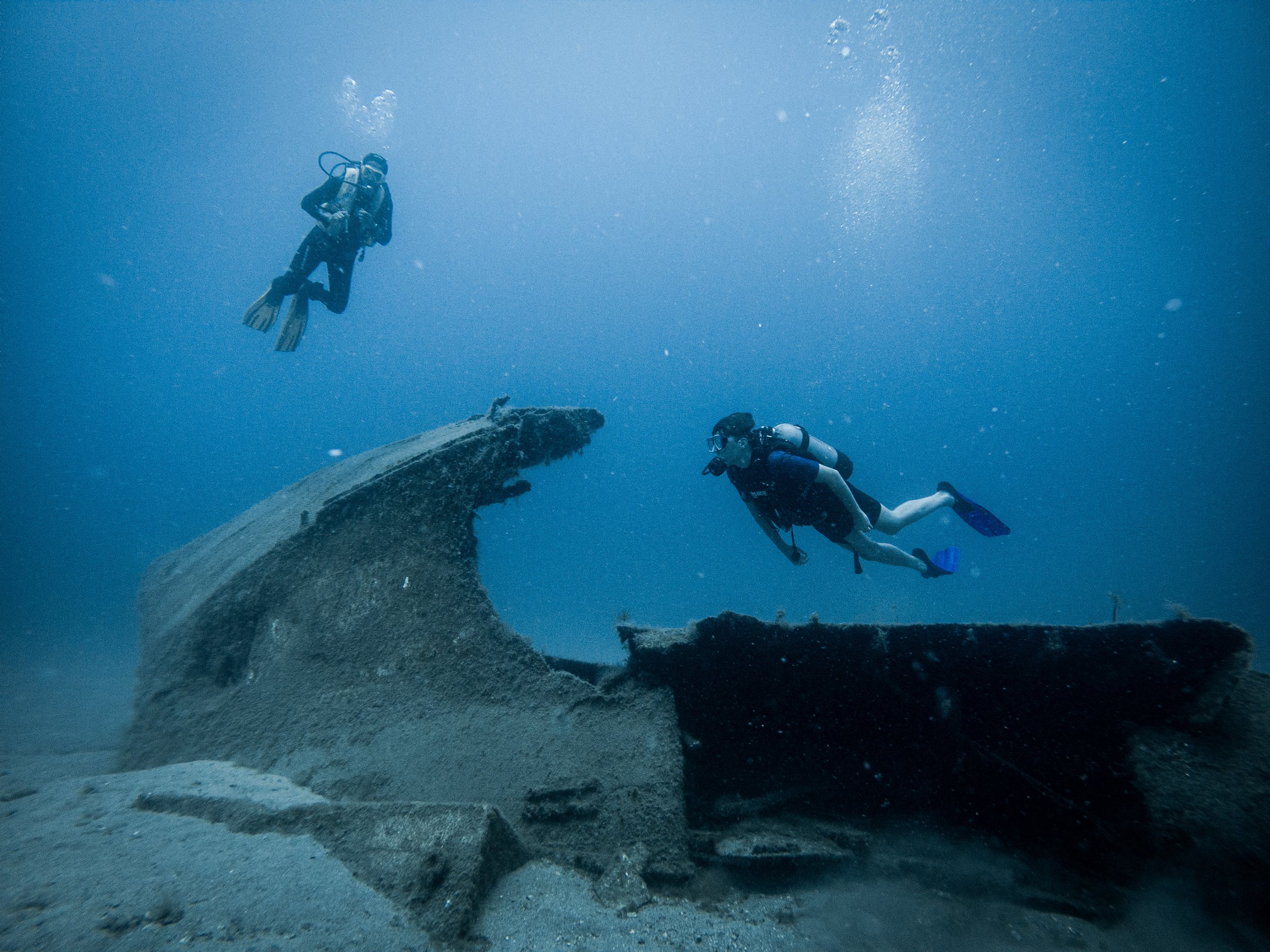
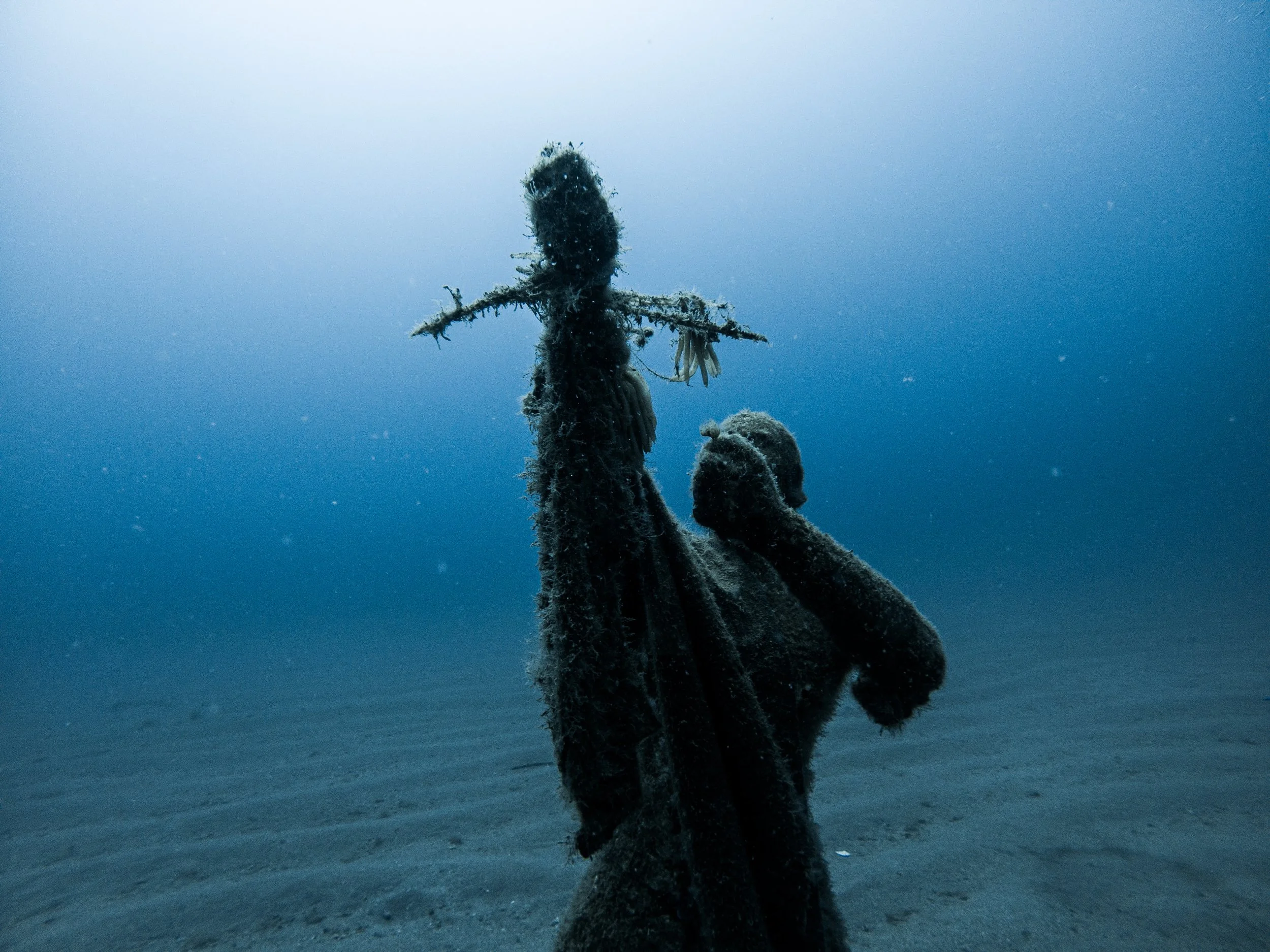
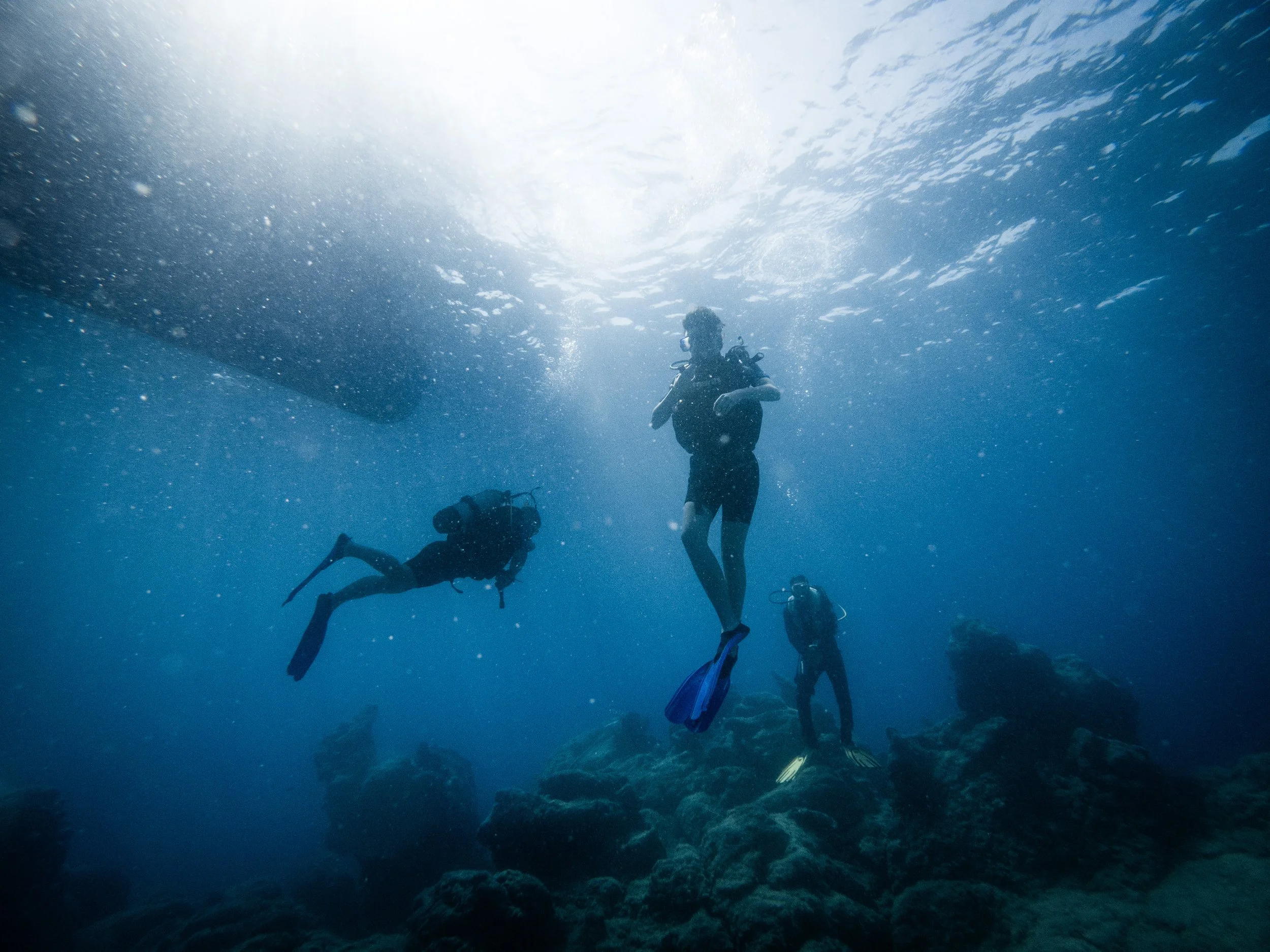
The light is different down there. You shoot in every direction, not only ahead. You move slowly, and the things worth photographing usually don't. With a wide-angle lens, close is everything: anything at a distance is lost — partly to the focal length, partly to the water itself.
The cave
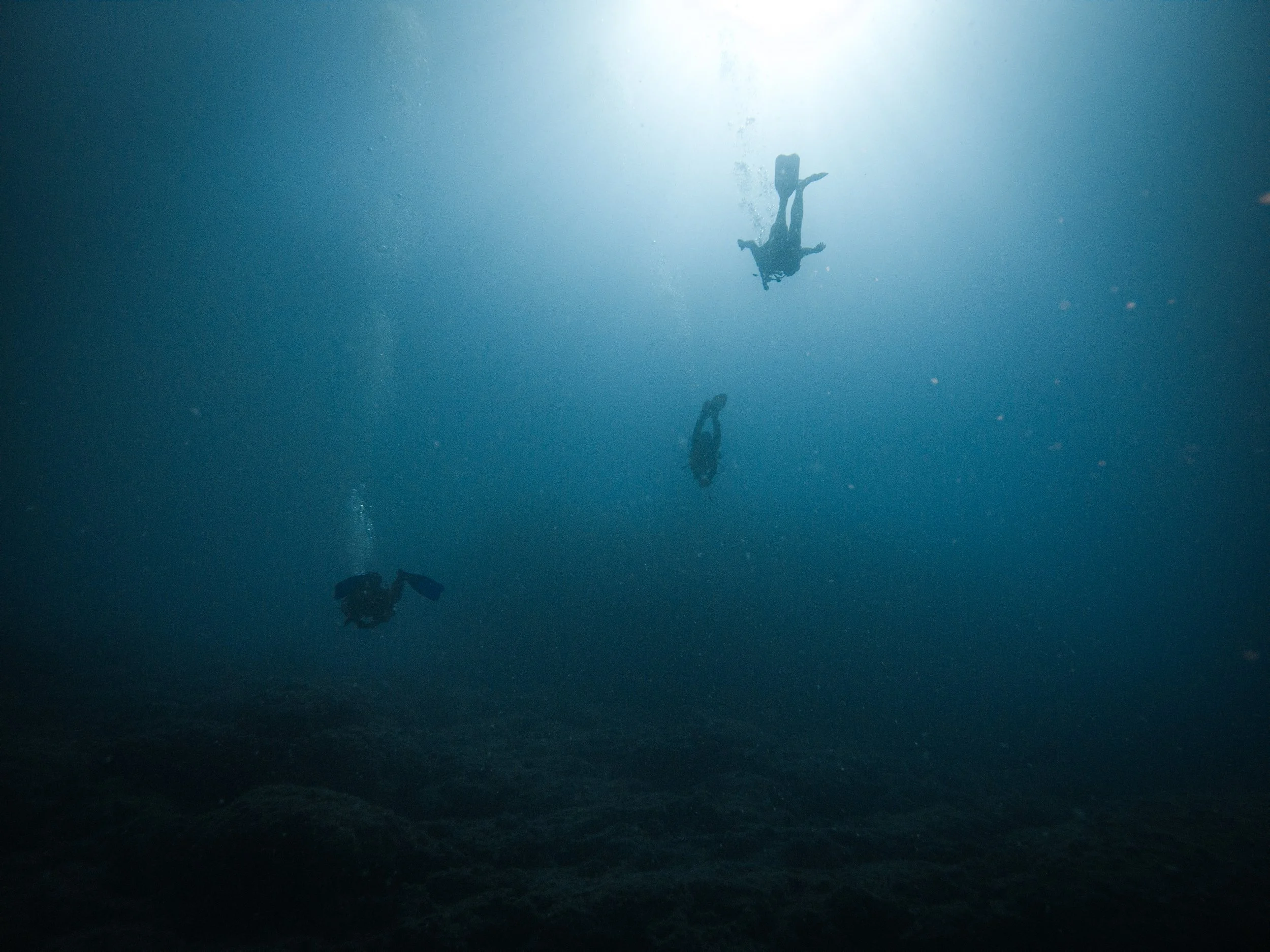
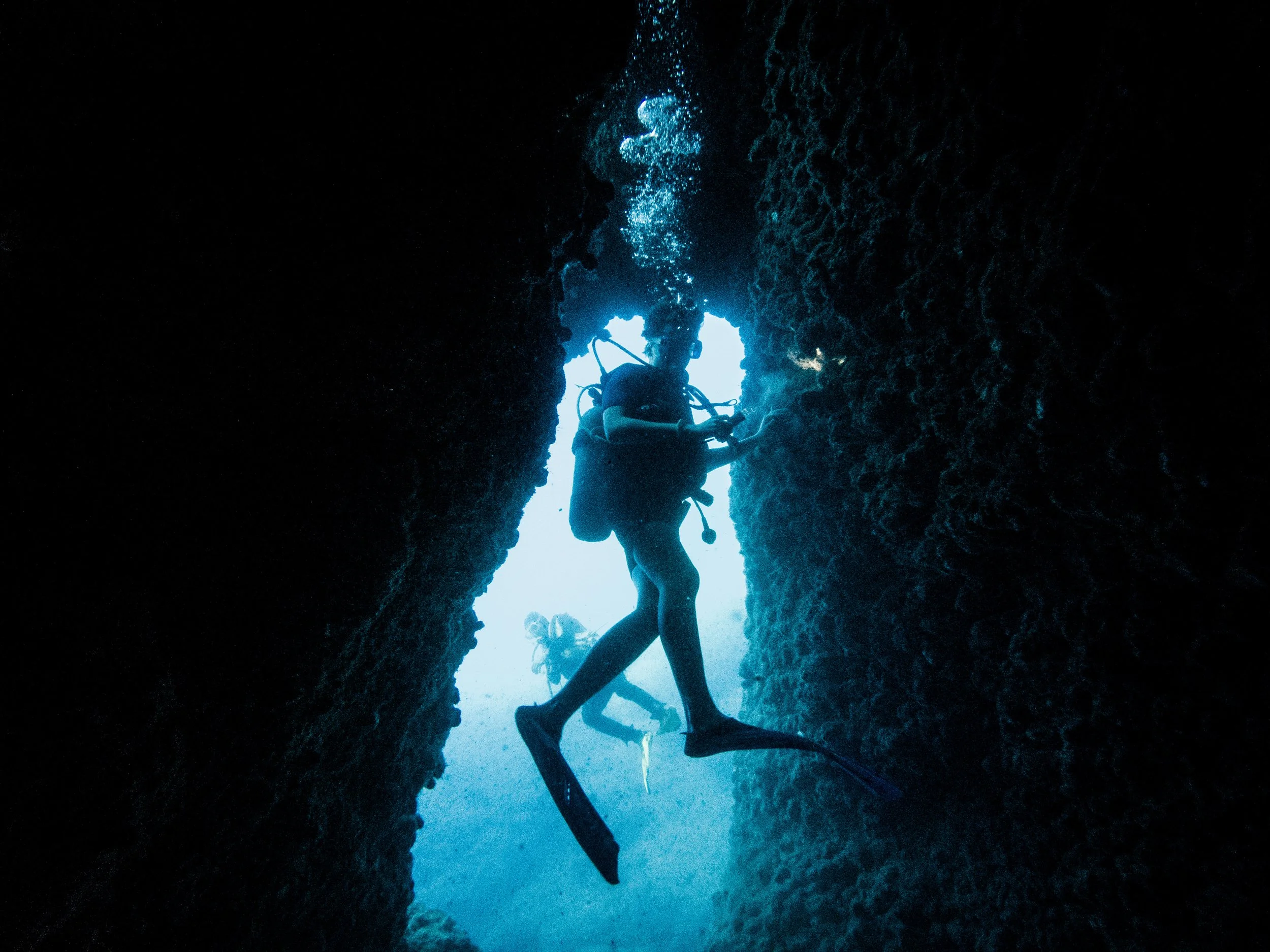
This year we also tried cave diving. It is a claustrophobic thing — narrow, dark, with no easy way up. Inside it was completely dark, and I hadn't worked out how to light anything; so we simply looked, at stalactites hanging from the roof in the beams of our torches. I left the video running and it caught us crawling through the tunnel single file.
The one photograph I took came on the way out: Misha ahead of me, a silhouette in the narrow mouth of the cave, with the light behind him.
The place
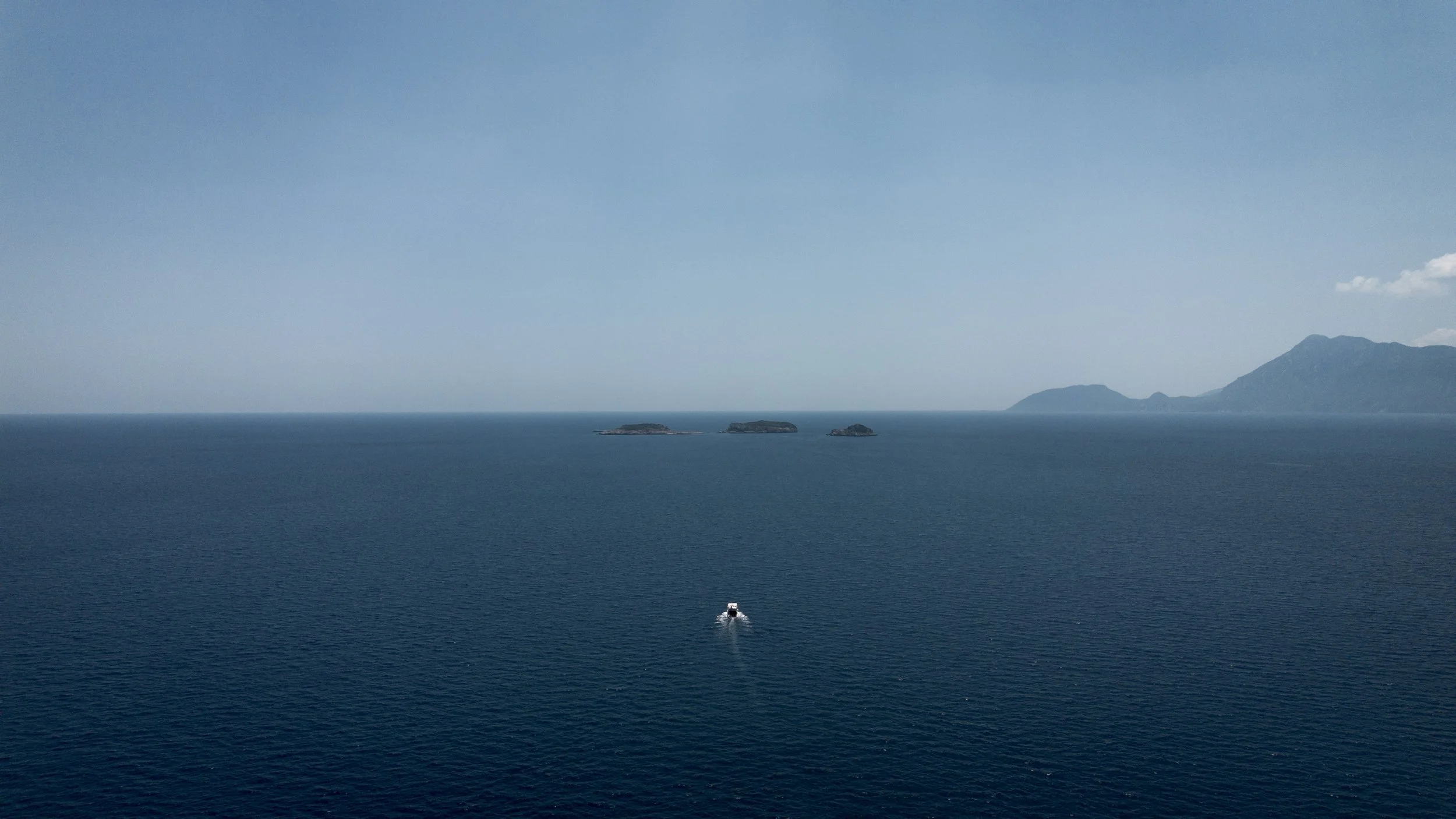
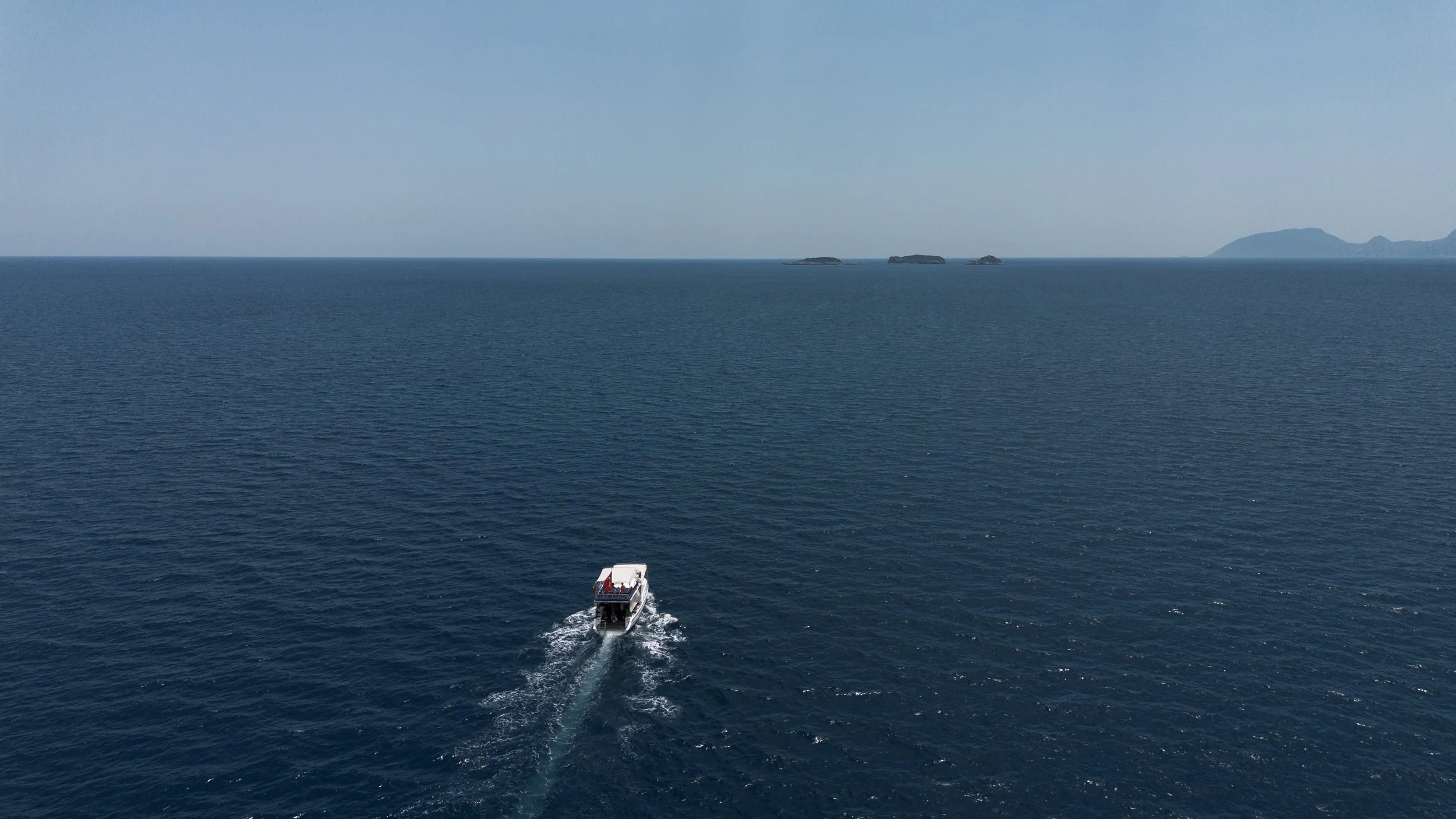
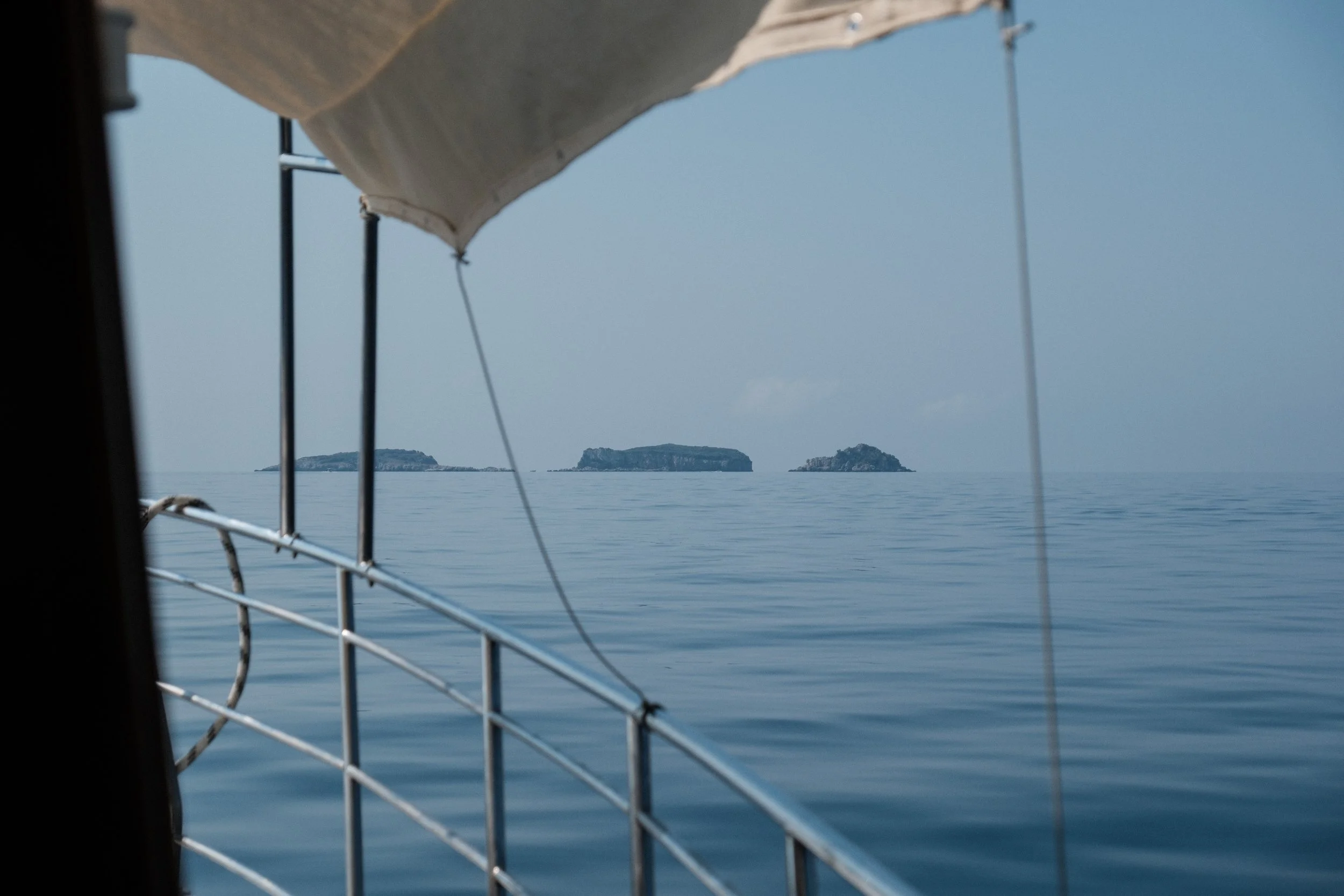
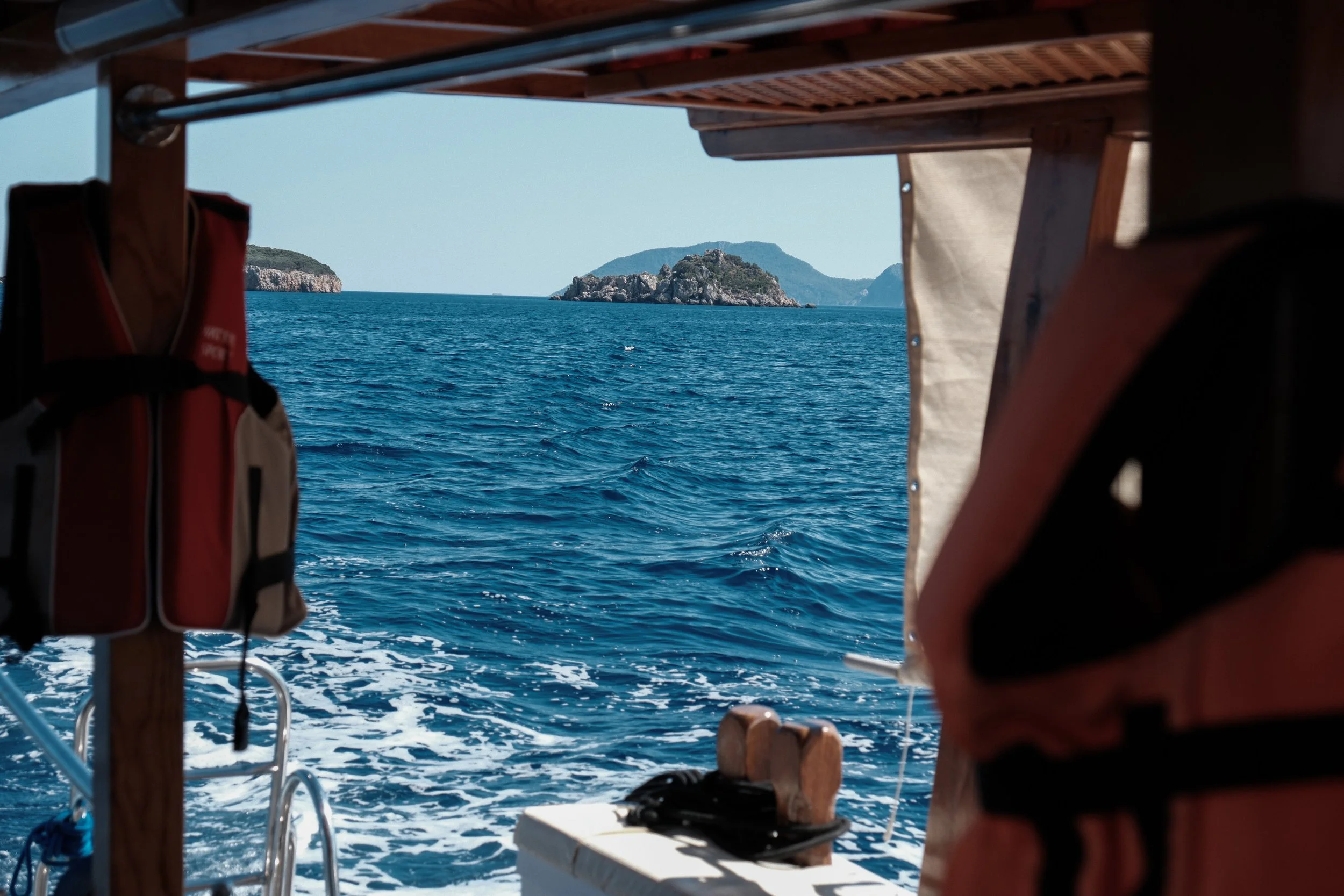
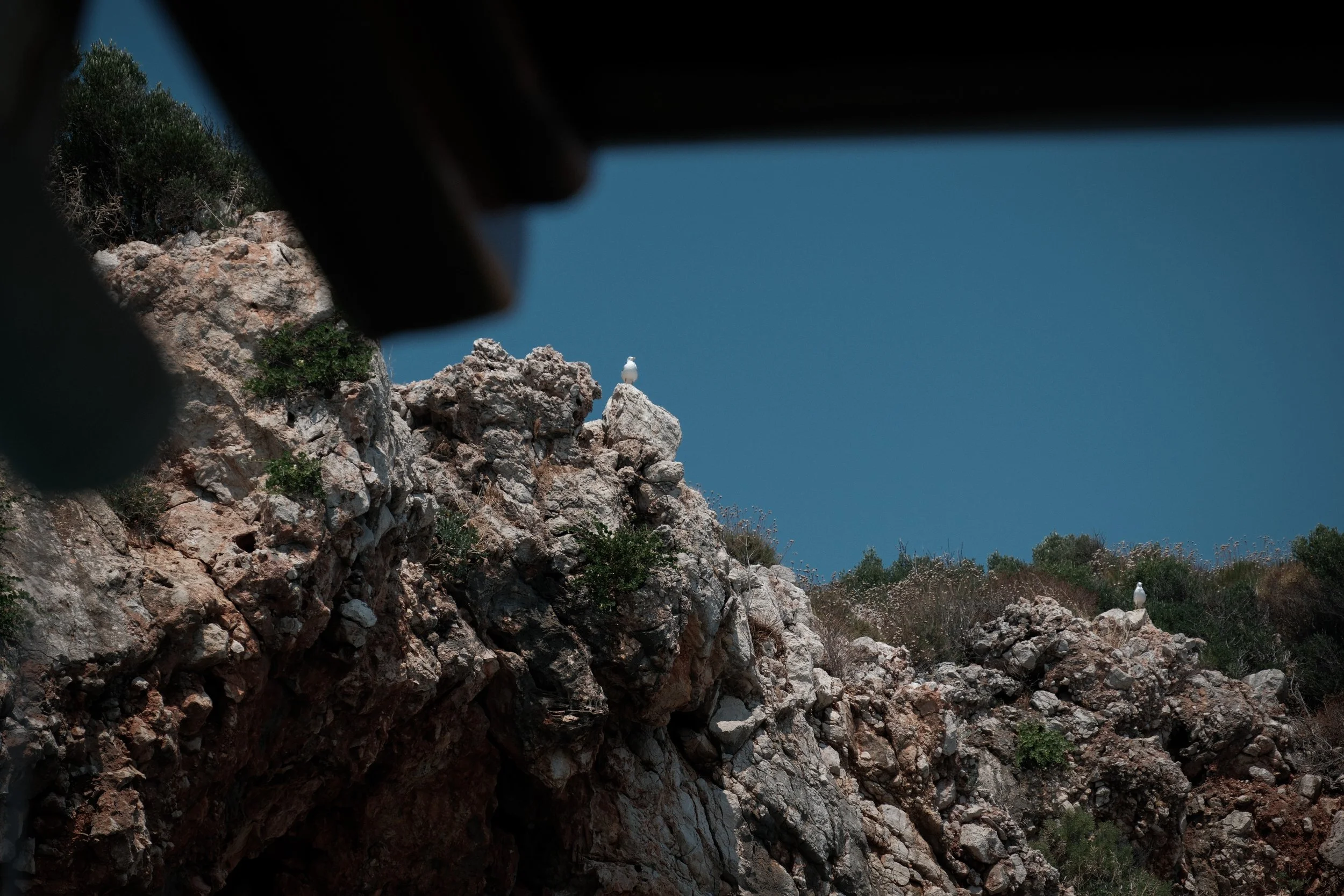
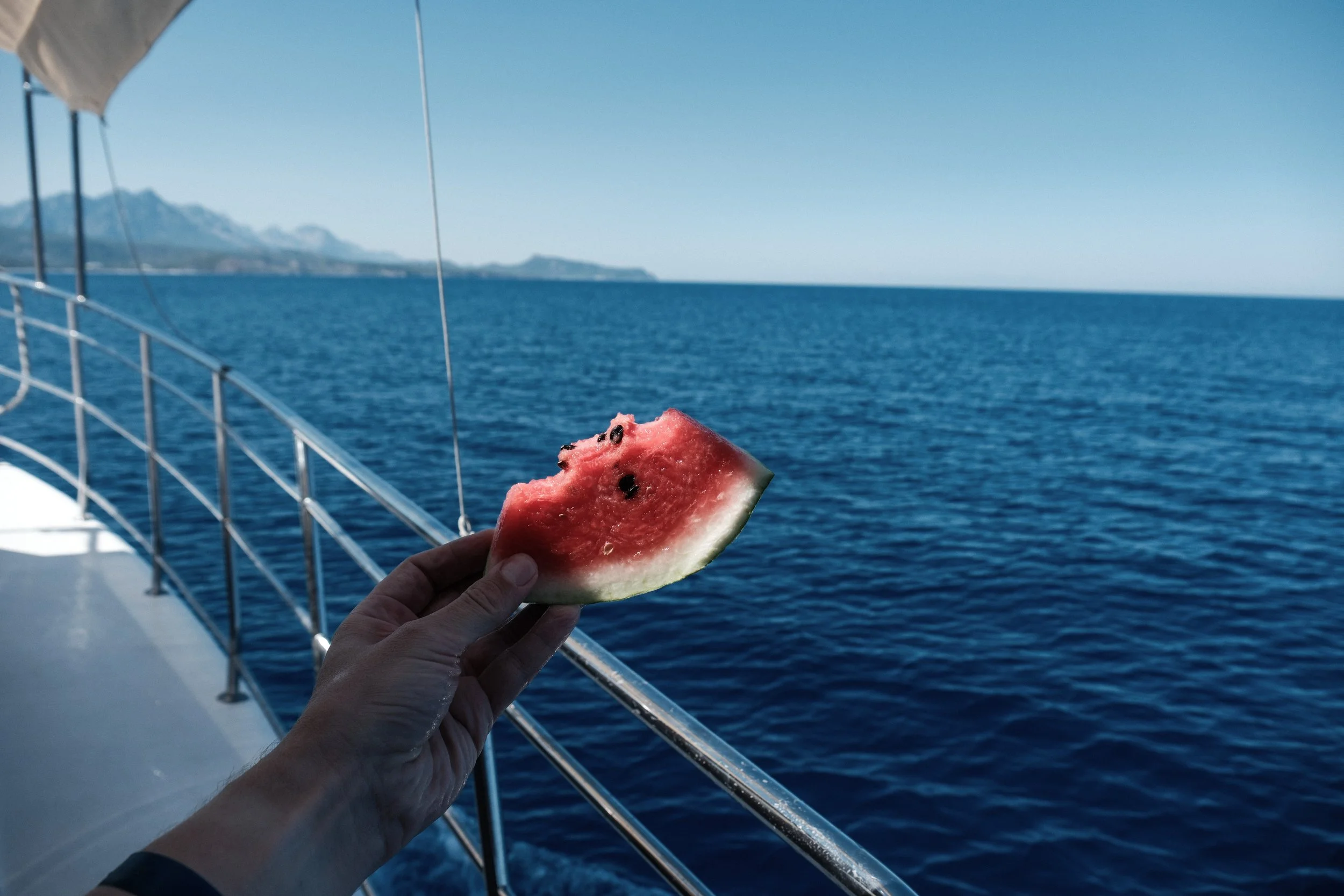
We dived at Üç Adalar — the Three Islands — the closest site to Marti Myra, where we stay.
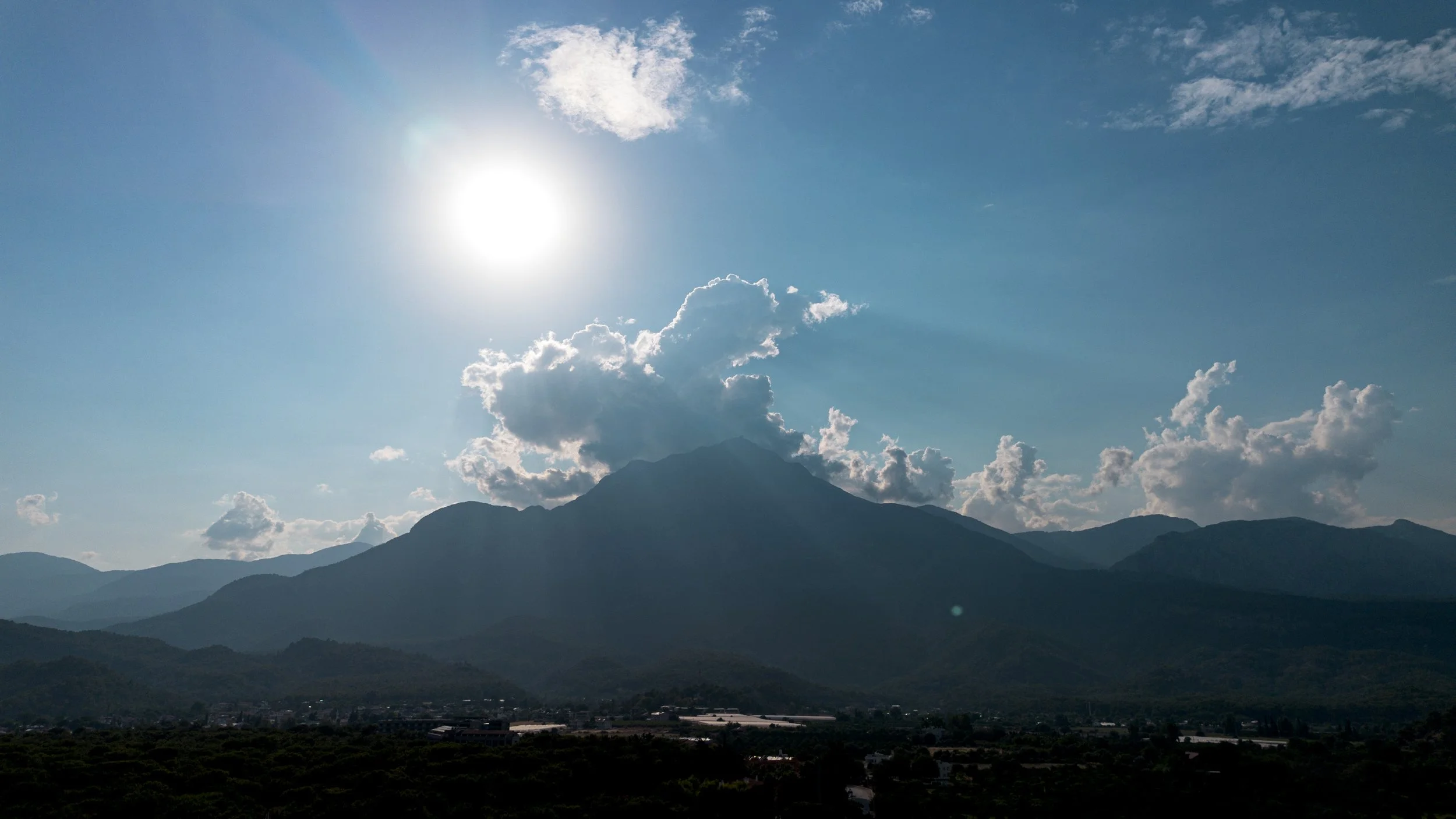
Tekirova is a good place to keep returning to. The village sits beside the ruins of Phaselis; Olympos, Bali-vibes of Çıralı and the flames of the Chimaera, tremendous Tahtalı mountain are all nearby. The Lycian Way begins a couple of kilometres away, which makes it a running and hiking place as much as a diving one.
Closing
An old camera, a handful of dives, and the surprise of how much there is to see once you stop looking only ahead. Slow breathing, with a camera in my hands. Who knows — more dives, and maybe a project of its own.